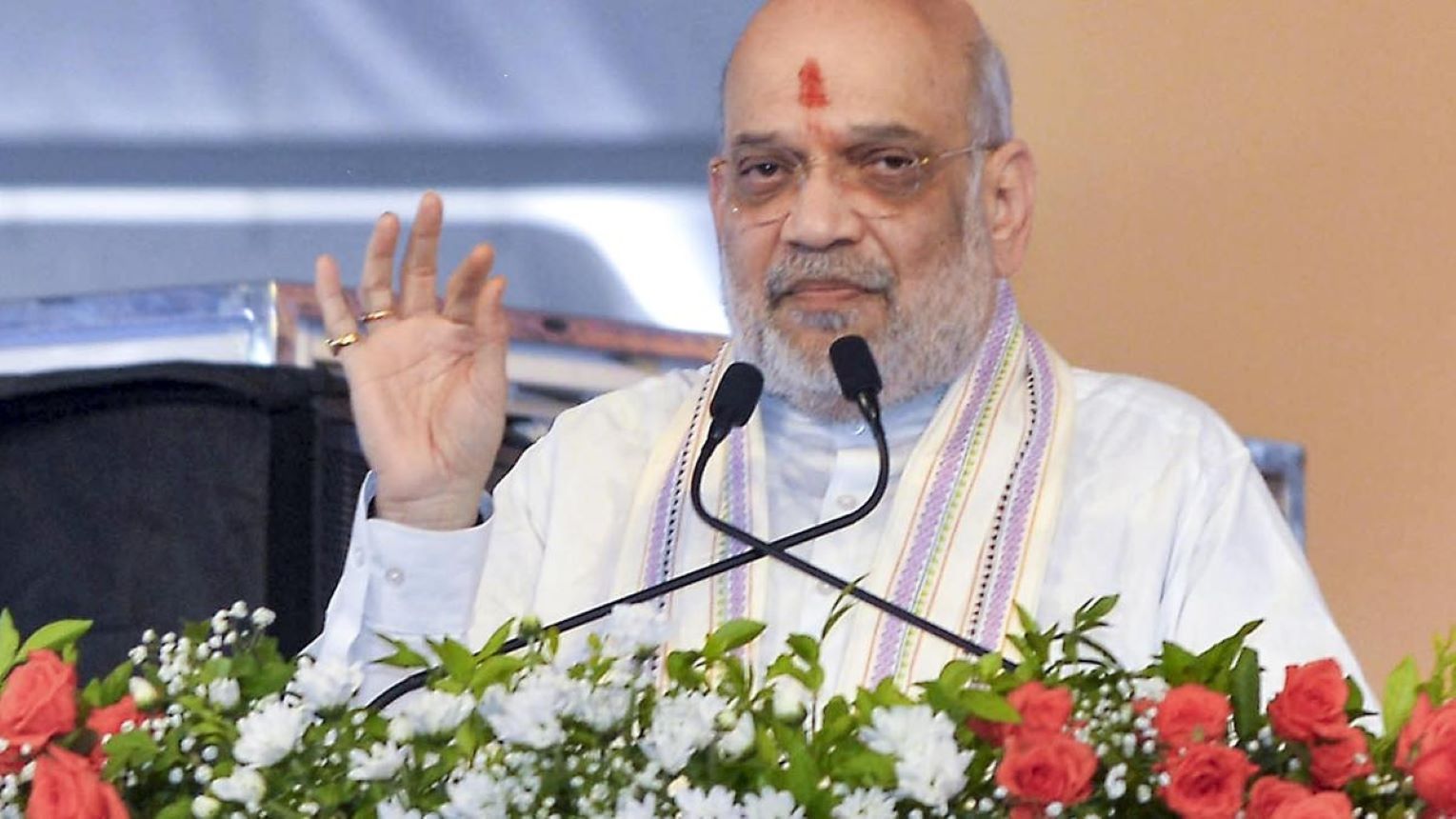
Ministry of Cooperation completed five
years since its inception on July 6, 2026
Ministry of Cooperation completed five years since its
establishment on 6 July 2026, highlighting major reforms undertaken to
strengthen India’s cooperative sector under the vision of “Sahkar Se
Samriddhi.”The 5th Foundation Day of the Ministry of Cooperation was celebrated
at Bharat Mandapam, New Delhi, where 50,000 Primary Agricultural Credit
Societies (PACS) were transformed into e-PACS to accelerate digital
governance.Foundation stones were laid for 47 cooperative grain storage
godowns, while the Milk Supply Review Dashboard of the National Dairy Development
Board (NDDB) and two digital banking platforms—Sahakar CBS and Sahakar
Sahyogi—were launched for Urban Cooperative Banks.
Key Reforms & Achievements (2021–2026)
¨
Digital Transformation of
Primary Agricultural Credit Societies (PACS): 50,000 Primary Agricultural
Credit Societies have been converted into e-Primary Agricultural Credit
Societies.The computerisation scheme was expanded, with the financial outlay
increased from ₹2,516 crore (2022) to ₹2,925.39 crore (2025).A total of 79,630
Primary Agricultural Credit Societies were sanctioned for computerisation, and
63,428 are using Enterprise Resource Planning software.Hardware has been
supplied to more than 65,000 Primary Agricultural Credit Societies, while
online audits have been completed for over 42,700 societies.Enterprise Resource
Planning software has also been made available in 14 Indian languages.
¨
Strengthening Primary
Agricultural Credit Societies as Multi-Service Centres: Model Bye-laws have
been adopted across 32 States and Union Territories, allowing Primary
Agricultural Credit Societies to undertake more than 25 business
activities.Their services have expanded beyond rural credit to include PM Kisan
Samriddhi Kendras, Common Service Centres, Jan Aushadhi Kendras, retail fuel
outlets, storage facilities, healthcare and digital services.
¨
At present, 39,177
Primary Agricultural Credit Societies are functioning as PM Kisan Samriddhi
Kendras, while 54,117 are operating as Common Service Centres.A total of 4,248
societies have been approved for Jan Aushadhi Kendras, with 843 ready for
operations, and 394 societies have applied for retail fuel outlets, of which
three outlets have been commissioned.
¨
Expansion of Cooperative
Network: A total of 37,454 new multipurpose Primary Agricultural Credit
Societies, dairy and fisheries cooperative societies have been
registered.Cooperative institutions have expanded to more than 2.55 lakh Gram
Panchayats through Primary Agricultural Credit Societies, 87,159 Gram
Panchayats through dairy cooperatives, and 29,964 Gram Panchayats through
fisheries cooperatives.
¨
Rural Infrastructure
Development: Foundation stones have been laid for 47 grain storage
godowns.Under the world’s largest decentralized grain storage initiative, 145
Primary Agricultural Credit Societies have completed cooperative godowns with a
storage capacity exceeding 68,702 metric tonnes.The initiative is expected to
reduce post-harvest losses and improve farmers’ price realization.
¨
Farmer Producer
Organisations (FPOs): A total of 1,863 Farmer Producer Organisations have been
established in the cooperative sector, including 1,117 promoted through Primary
Agricultural Credit Societies and 1,070 Fisheries Farmer Producer
Organisations.Financial assistance of ₹98 crore has been provided.
¨
Tax and Financial
Reforms: The surcharge has been reduced from 12% to 7% for cooperatives earning
between ₹1 crore and ₹10 crore, while the Minimum Alternate Tax has been
reduced from 18.5% to 15%.The Tax Deducted at Source threshold on cash
withdrawals has been increased from ₹1 crore to ₹3 crore.Higher cash
transaction limits have also been provided for Primary Agricultural Credit
Societies and Primary Cooperative Agriculture and Rural Development Banks.
¨
White Revolution 2.0:
White Revolution 2.0 aims to increase milk procurement by 50% by 2028–29.A
total of 25,282 dairy cooperative societies have been registered, with a focus
on expanding women-led dairy cooperatives.
¨
National Multi-State
Cooperative Institutions: Three new national cooperative institutions have been
established.National Cooperative Exports Limited has exported 15.4 lakh metric
tonnes worth ₹6,295 crore to 38 countries.National Cooperative Organics Limited
has 14,286 member cooperatives, while Bharatiya Beej Sahakari Samiti Limited
has 38,665 member cooperatives.
¨
Capacity Building:
India’s first cooperative university, Tribhuvan Sahkari University, is located
in Anand, Gujarat, and has been established.
¨
Cooperative Financing:
During FY 2025–26, the National Cooperative Development Corporation sanctioned
₹1.55 lakh crore and disbursed ₹1.27 lakh crore.It also released ₹2,320 crore
to Farmer Producer Organisations and Cluster-Based Business
Organisations.Bharat Taxi: Bharat Taxi is India’s first cooperative-based
mobility platform.It has 6.37 lakh registered drivers and 35.77 lakh registered
customers.
Significance
¨
Strengthens grassroots
institutions and deepens cooperative governance across rural India.
¨
Improves access to
affordable credit, storage, healthcare, digital services and markets through
diversified PACS.
¨
Enhances transparency and
efficiency through digitalisation and ERP-based governance.
¨
Supports farmers’ income
by improving storage, processing, value addition and market access.
¨
Expands employment
opportunities through cooperative-led enterprises in agriculture, dairy,
fisheries and mobility services.
¨ Promotes women’s economic participation through dairy cooperatives and rural entrepreneurship
¨ Contributes to inclusive, sustainable and rural-led growth, supporting the vision of Viksit Bharat through “Sahkar Se Samriddhi.”
 and the District Performance Grading Index 2025–26 to evaluate the school education performance of states and Union Territories.jpg)
 Approved.jpg)