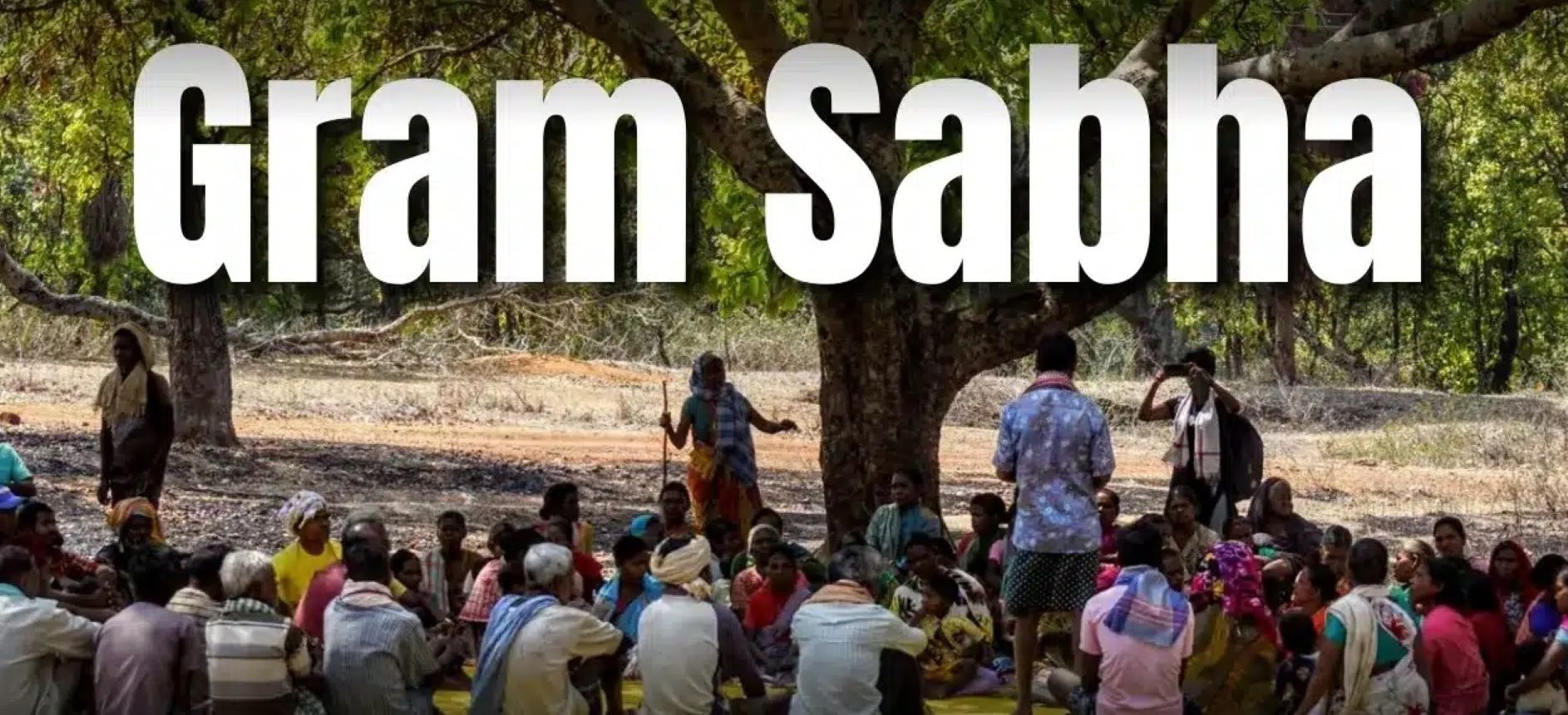
National Study Report on Low Participation
in Gram Sabhas Released
In a significant step towards strengthening grassroots
democracy in rural India, the Ministry of Panchayati Raj has released the
“National Study Report on Low Participation in Gram Sabhas”. The report
highlights the key barriers affecting citizens’ participation in Gram Sabha
meetings across States and Union Territories and recommends measures to make
these institutions more inclusive, participatory, and effective.
What is a Gram Sabha?
¨
A Gram Sabha is a body
comprising all registered voters residing within the area of a Gram Panchayat.
It is the foundation of the Panchayati Raj system, where citizens participate
directly in decision-making on local development plans, budgets, welfare
schemes, and social audits. It serves as the primary institution of
participatory democracy at the village level.
More on the News
¨
The study was conducted
by the National Institute of Rural Development and Panchayati Raj (NIRDPR),
Hyderabad, on the request of the Ministry of Panchayati Raj.
¨
It is one of the largest
field-based assessments of Gram Sabha participation, covering 26 States/UTs,
213 districts, nearly 400 Gram Panchayats and around 7,800 respondents. The
study also included 50 PESA Gram Panchayats and 130 Women-Friendly Gram
Panchayats.
¨
The study examined
factors influencing participation, inclusiveness, governance practices,
communication systems, infrastructure, accessibility and citizen perceptions
regarding Gram Sabha functioning.
Key Findings of the Report
¨
Multidimensional Nature
of Low Participation: The study found that low participation in Gram Sabhas is
multidimensional, shaped by socio-economic, institutional, governance and
behavioural factors rather than any single cause.
Livelihood and Time-Related Constraints
¨
Livelihood and
time-related constraints emerged as the single largest barrier (55.5%),
followed by awareness and communication issues (16.2%).
¨
Busy work schedules
(41.74%) and agricultural activities (30.26%) were identified as the most
significant occupational constraints affecting attendance.
Awareness and Procedural Literacy Deficit
¨
The study revealed an
important distinction between awareness of Gram Sabha meetings and
understanding of Gram Sabha processes.
¨
While awareness regarding
meetings was generally high, knowledge of citizen rights, quorum requirements,
decision-making processes and the institutional role of Gram Sabha was
comparatively lower.
¨
Participation Gaps among
Social Groups: Migrant households (17.61%), youth (16.73%), elderly citizens
(15.80%) and women (13.40%) were identified among the least represented groups
in Gram Sabha processes.
Emergence of “Gram Sabha Participation
Fatigue”
¨
The study identified an
emerging phenomenon termed “Gram Sabha Participation Fatigue”, where repeated
meetings without visible outcomes, unresolved grievances, repetitive
discussions and limited follow-up gradually reduce public enthusiasm for
participation.
¨
Participation fatigue was
found to be driven by transparency concerns (45.46%), lack of relevance of
discussions (42.0%), repetitive discussions (33.4%), trust deficit (32.7%),
political interference (27.9%) and weak grievance resolution (16.2%).
Major Policy Recommendations
¨
National Gram Sabha
Awareness and Mobilisation Mission: Launch a National Gram Sabha Awareness,
Procedural Literacy and Mobilisation Mission to strengthen citizen awareness,
procedural understanding and democratic participation.
¨
Strengthen Community
Mobilisation: Institutionalise structured pre-Gram Sabha mobilisation through
Ward Members, Self-Help Groups, frontline workers, youth groups and community
institutions to ensure wider citizen outreach.
¨
Livelihood-Sensitive
Scheduling: Schedule Gram Sabha meetings by considering agricultural cycles,
local work patterns, migration realities and community preferences.
¨
Improve Transparency and
Accountability: Institutionalise Action Taken Reports (ATRs),
grievance-tracking systems, public review mechanisms and advance disclosure of
agendas, beneficiary lists and budgets to build public trust.
Leverage Technology and Convergence: Strengthen convergence

 scheme will continue until September 30, 2026.jpg)