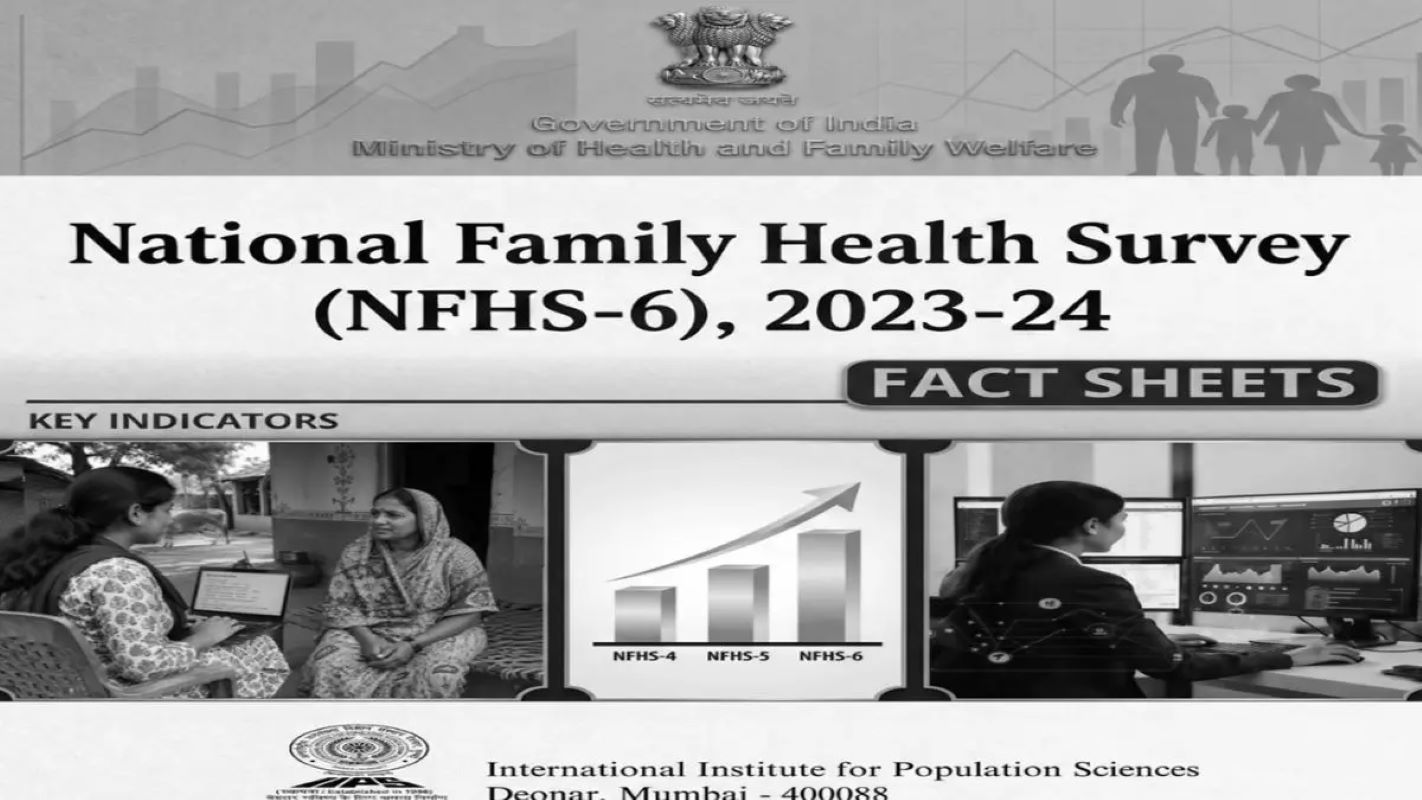
NFHS-6 was conducted during 2023–24 by the
Ministry of Health and Family Welfare and the International Institute for
Population Sciences Mumbai
¨
National Family Health
Survey-6 (NFHS-6) was conducted during 2023–24 by the Ministry of Health and
Family Welfare and the International Institute for Population Sciences Mumbai.
¨
NFHS-6 reported a rise in
obesity and high blood sugar levels among Indian adults compared to NFHS-5
(2019–21).
¨
The National Family
Health Survey (NFHS) is a large-scale household survey that collects data on
fertility, mortality, nutrition, anaemia, family planning, and non-communicable
diseases.
¨ NFHS-6 included
indicators related to obesity, blood sugar, and other health parameters across
States and Union Territories.
¨ Among women aged 15–49
years, obesity increased from 24% in NFHS-5 to 30.7% in NFHS-6.
¨ Among men aged 15–49 years,
obesity rose from 22.9% to 27.3% during the same period.
¨
Urban areas recorded
higher obesity levels than rural areas.
¨ In 2023–24, 42.8% of
urban women were overweight or obese, compared with 25.5% of rural women.
¨ Among women aged 15 years
and above, the prevalence of high blood sugar levels or use of medication for
blood sugar control increased from 13.5% in NFHS-5 to 17.8% in NFHS-6.
¨
Among men aged 15 years
and above, the prevalence rose from 15.6% to 20.9%.
¨
Kerala recorded the
highest diabetes prevalence, with 31.9% among men and 28.9% among women in
2023–24.
¨
Puducherry recorded the
highest female obesity prevalence at 46.3%.
¨ It was followed by Chandigarh at 44% and Delhi at 41.4%.
¨ The findings indicate a growing burden of obesity, diabetes, and other non-communicable diseases in India.