Sharp Rise in Sugar Prices: Supply,
Ethanol Diversion and Policy Concerns
Sugar prices in India have witnessed a sharp increase
amid lower-than-expected production, declining stocks, and rising demand during
the festive season. While the Central Government has attributed the price rise
mainly to supply-side factors, the diversion of sugarcane and sugar products
towards ethanol production and the broader policy framework governing the sugar
sector have triggered considerable debate.
More on the News
¨
The all-India modal
retail price of sugar rose from ₹45/kg in mid July 2026 to ₹65/kg in mid August
2026, nearly a ₹20/kg increase in a month.
¨
Gross sugar production
for 2025–26 has been revised from the initial estimate of 343.5 lakh tonnes
(lt) to 309.5 lt. After around 30 lt is diverted for ethanol, net sugar
production is estimated at about 279 lt.
¨
With opening stocks of
just over 50 lt, total availability is estimated at around 329 lt. After
domestic consumption and exports, closing stocks could fall to about 41 lt, the
lowest since 2016–17.
¨
Major producers have
recorded significant shortfalls: Maharashtra 99.2 lt against 130 lt estimated,
Karnataka 47.2 lt against 63.5 lt, and Uttar Pradesh 89.7 lt against 103.2 lt.
¨
To ease supply pressure,
the Government has banned exports until 30 September 2026, allowed duty-free
import of 10 lt of raw sugar, imposed stock limits and sought information on
large bulk purchases.
Why Are Sugar Prices Rising?
¨
Production shortfall:
Excess rainfall and waterlogging in Maharashtra, Karnataka and Gujarat affected
cane growth and sugar recovery, while diseases such as Red Rot and Top Shoot
Borer affected production in Uttar Pradesh.
¨
Low carry-over stocks:
Closing stocks of around 41 lt would be the lowest since 2016–17, leaving
little buffer against supply disruptions.
¨
Festive demand: Demand is
expected to rise with Dussehra and Diwali, particularly from sweet
manufacturers, confectionery producers and other bulk consumers.
¨
Stocking behaviour:
Expectations of lower production in the next season have encouraged some mills,
traders and bulk consumers to build inventories, adding to market pressure.
Ethanol–Sugar Debate: What Is the Issue?
¨
Around 30 lt of sugar
equivalent is estimated to have been diverted towards ethanol in 2025–26,
reducing the quantity available as sugar.
¨
However, the current
production shortfall itself is much larger: the latest gross estimate of 309 lt
is 34.5 lt below the initial 343.5-lt estimate. Hence, ethanol diversion alone
cannot explain the price surge.
¨
Of 810.67 crore litres
supplied for ethanol blending between November 2025 and July 2026, 32% came
from sugarcane-based feedstocks and 68% from grains, including maize and FCI
rice.
¨
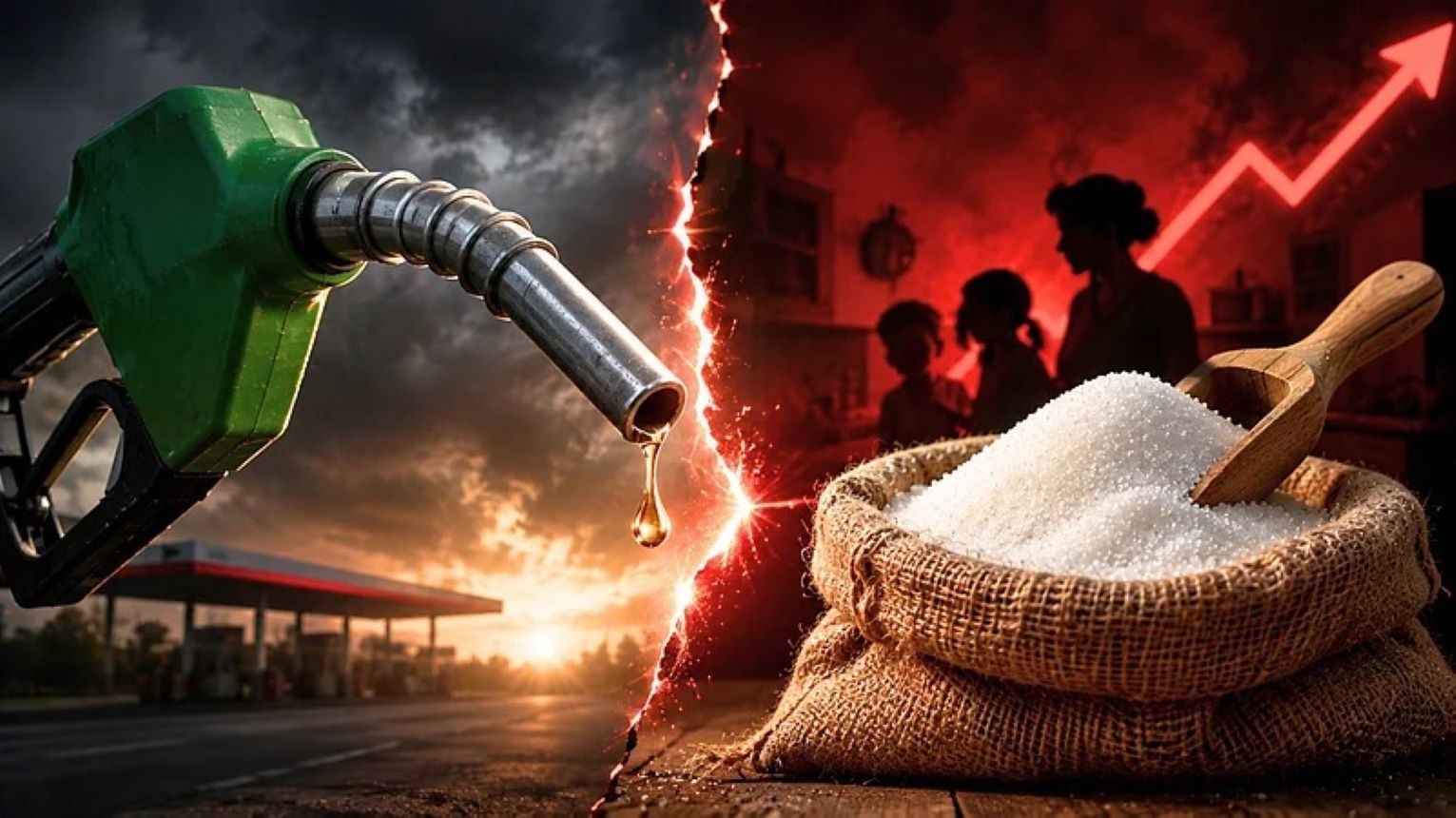
The debate therefore
involves a wider trade-off between sugar availability, ethanol blending, energy
security and sugar-mill viability.
Government Response and the Policy Dilemma
¨
The Government banned
sugar exports until 30 September 2026 to safeguard domestic availability amid
production uncertainty.
¨
It subsequently permitted
10 lt of raw-sugar imports at zero duty until 31 October 2026, compared with
the normal 100% tariff.
¨
A 400-tonne stock limit
was imposed on dealers, while details of bulk consumers purchasing 500 tonnes
or more were sought to monitor inventory build-up.
¨
These measures reflect
the need to balance consumer prices, farmer returns, mill viability and
ethanol-blending objectives.
¨
The policy challenge is
to calibrate sugar diversion towards ethanol according to production, stocks
and domestic prices, rather than treating sugar and ethanol as competing
objectives.