Statistics Day 2026: MoSPI Releases Four
Key Publications to Track India’s Progress Towards SDGs 2030
On the occasion of Statistics Day, the Ministry of
Statistics and Programme Implementation (MoSPI) released four important
publications to assess India’s progress towards achieving the Sustainable
Development Goals (SDGs) by 2030 through the National Indicator Framework
(NIF). These publications provide comprehensive data and analysis to support
evidence-based policymaking and monitor the country's development performance.
About the Reports
¨
Sustainable Development
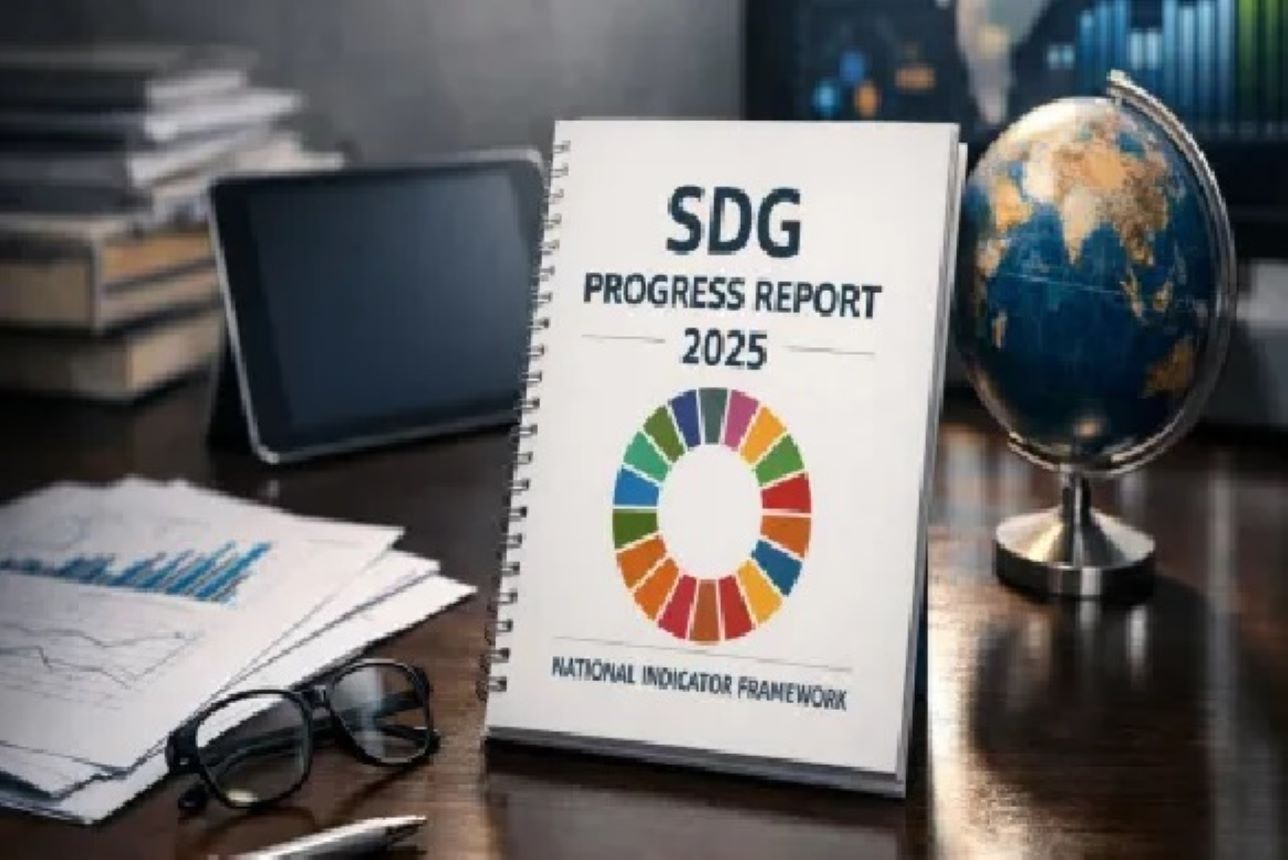
Goals – National Indicator Framework (NIF) Progress Report, 2026: Flagship
report presenting the latest time-series data on India’s progress across all 17
SDGs using national indicators.
¨
Provides an evidence base
for policymakers, researchers and planners for monitoring SDG implementation.
¨
Data Snapshot on SDG–NIF
Progress Report, 2026: A concise handbook derived from the Progress Report.
¨
Presents national-level
SDG indicators in a simplified and user-friendly format.
¨
Sustainable Development
Goals – National Indicator Framework, 2026 (with Metadata): Handbook containing
all 277 national SDG indicators along with detailed metadata, data sources and
reporting periodicity.
¨
Transforming Lives:
India’s Achievements under the People Dimension of the SDGs: First thematic SDG
bulletin aligned with the People pillar of the 2030 Agenda.
Covers India’s progress under
¨
SDG 1: No Poverty
¨
SDG 2: Zero Hunger
¨
SDG 3: Good Health and
Well-being
¨
SDG 4: Quality Education
¨
SDG 5: Gender Equality
Highlights major government initiatives supporting
human development and India’s commitment to “Leaving No One Behind.”
Key Findings of the Reports
¨
Social Development:
Population covered under social protection systems increased from 22.0% (2016)
to 65.3% (2026).Maternal Mortality Ratio (MMR) declined from 122 (2015–17) to
87 (2022–24) per 100,000 live births.Sex Ratio at Birth improved from 896 to
918 females per 1,000 male live births between 2015–17 and 2022–24.Share of
female professionals and technical workers increased from 48.7% (2023–24) to
51.3% (2025).
¨
Economic Development:
Unemployment rate declined from 6.1% (2017–18) to 3.1% (2025).Total internet
subscriptions more than tripled from 302.36 million (2015) to 969.10 million
(2025).
¨
Agriculture & Food
Security: Plant genetic resources conserved increased from 4.33 lakh to 4.92
lakh (2014–15 to 2025–26).Animal genetic resources increased from 1.40 lakh to
3.62 lakh.Fish genetic resources increased from 47 to 105.
¨
Environment &
Climate: Installed renewable energy capacity increased from 64.04 watts per
capita (2014–15) to 193.36 watts per capita (2025–26).Number of waste recycling
plants increased from 829 (2019–20) to 3,236 (2025–26).Ramsar sites expanded
from 4.15% to 8.66% of India’s total wetland area between 2016 and 2026.
Sustainable Development Goals (SDGs)
¨
The SDGs were adopted by
the United Nations General Assembly in September 2015 under the resolution
“Transforming our World: The 2030 Agenda for Sustainable Development.”
¨
The framework came into
effect on 1 January 2016.
¨
It consists of 17
Sustainable Development Goals, 169 targets, and a Global Indicator Framework
(GIF) for monitoring progress.
¨ The SDGs integrate the
social, economic and environmental dimensions of sustainable development with
the core principle of “Leaving No One Behind.”
¨ In India, MoSPIis the nodal agency for SDG data monitoring and has developed the National Indicator Framework (NIF)in consultation with Ministries, NITI Aayog, UN agencies and other stakeholders.
¨ The NIF 2026 contains 277 national SDG indicators covering all 17 SDGs and is periodically reviewed by the High-Level Steering Committee (HLSC) chaired by the Chief Statistician of India.
 Bill, 2026.jpg)