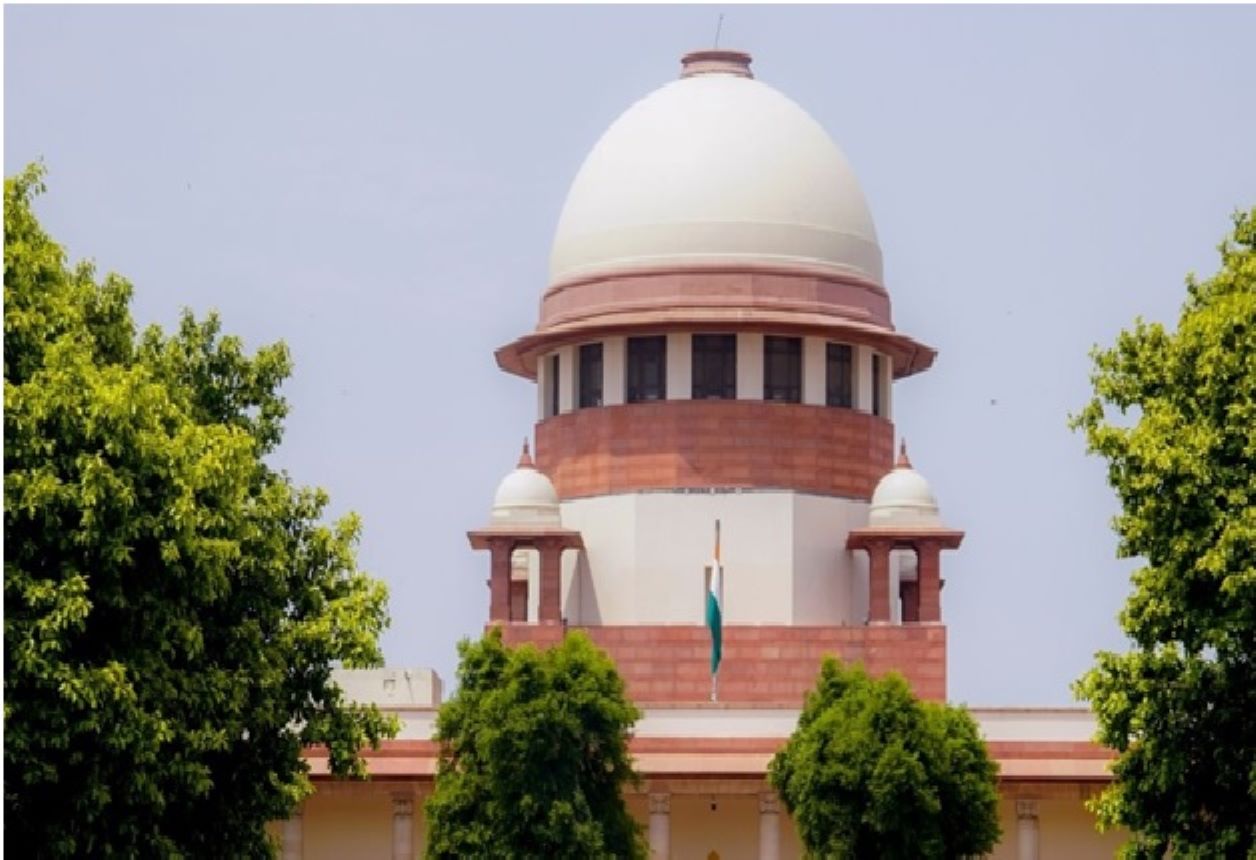
Supreme Court of India has imposed an
interim ban on construction and development within 100 metres of the edge of
the Jojari River in Rajasthan
¨
Supreme Court of India
has imposed an interim ban on construction and development within 100 metres of
the edge of the Jojari River in Rajasthan.
¨
Hazardous industries and
pollution-causing activities have also been prohibited within 500 metres on
either side of the river’s existing flood line or present flow path.
¨
The case is a suo motu
environmental matter titled “In Re: 2 Million Lives At Risk, Contamination In
Jojari River, Rajasthan.”
¨
The case concerns
industrial pollution in western Rajasthan affecting areas linked to Jodhpur,
Pali and Balotra.
¨
The restrictions will
remain in force until the scientific demarcation of the High Flood Line and
ecological buffer zones is completed.
¨
The Court emphasized the
need for scientific identification of flood-prone and environmentally sensitive
areas along the river.
¨
The Supreme Court
directed the Rajasthan government to constitute an Integrated Coordination
Group.
¨
The group will be headed
by the Chief Secretary and will address pollution in the Jojari, Bandi and Luni
rivers.
¨
The state government has
also been directed to establish an independent River Commission or River
Rejuvenation Authority for the restoration of polluted river systems.
¨
The Court clarified that
the Integrated Coordination Group is an internal government arrangement and
does not override the High-Level Ecosystem Oversight Committee.
¨
Suo motu means that a
court initiates proceedings on its own motion without a formal petition from a party.
¨
The High Flood Line
indicates the level or boundary up to which floodwaters may rise in a
particular area.
¨
River rejuvenation
authorities are intended to support pollution control, ecological restoration
and basin-level coordination.
¨
The Jojari, Bandi and
Luni rivers are important components of the river systems of western Rajasthan.
¨
The case is important
from the perspective of environmental protection, floodplain regulation, river
pollution control and judicial intervention in environmental matters.