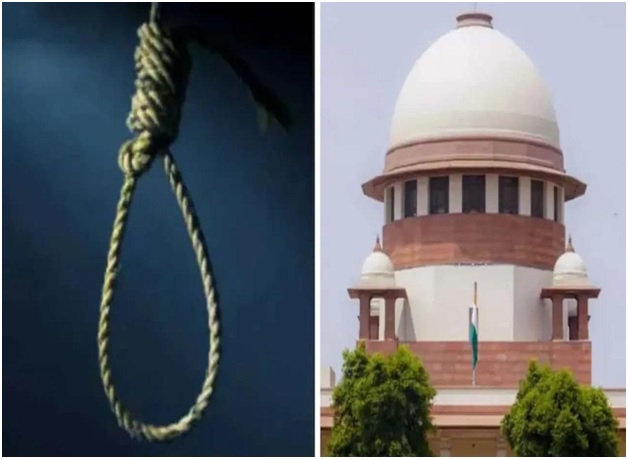
¨ Supreme Court of India has upheld hanging as a constitutionally permissible method of executing the death penalty.
¨ The Court rejected the challenge seeking to replace hanging with an alternative method of execution.
¨ The judgment is significant in the context of capital punishment, human dignity and Article 21 of the Constitution.
¨ In India, the death penalty is the most severe form of criminal punishment.
¨ Under the existing legal framework, the execution of the death penalty is carried out by hanging.
¨ The death penalty should be imposed only in the “rarest of rare” cases.
¨ This principle aims to ensure that the most severe punishment is used only under exceptional circumstances.
¨ The Supreme Court upheld the constitutional validity of hanging and dismissed the Public Interest Litigation challenging it.
¨ The Court declined to reconsider the legal position established in Deena v. Union of India (1983).
¨ The Court observed that the scientific material presented before it did not establish that any alternative method was clearly more humane than hanging.
¨ The Court did not consider the issue permanently settled.
¨ If future scientific, medical or empirical evidence fundamentally changes the assumptions underlying the Deena judgment, the issue may be reconsidered.
¨ The Central Government remains free to examine alternative methods of execution, keeping open the possibility of future policy or legislative changes.
Supreme Court of India has upheld hanging as a constitutionally permissible method of executing the death penalty
Supreme
Court of India has upheld hanging as a constitutionally permissible method of
executing the death penalty


.jpg)