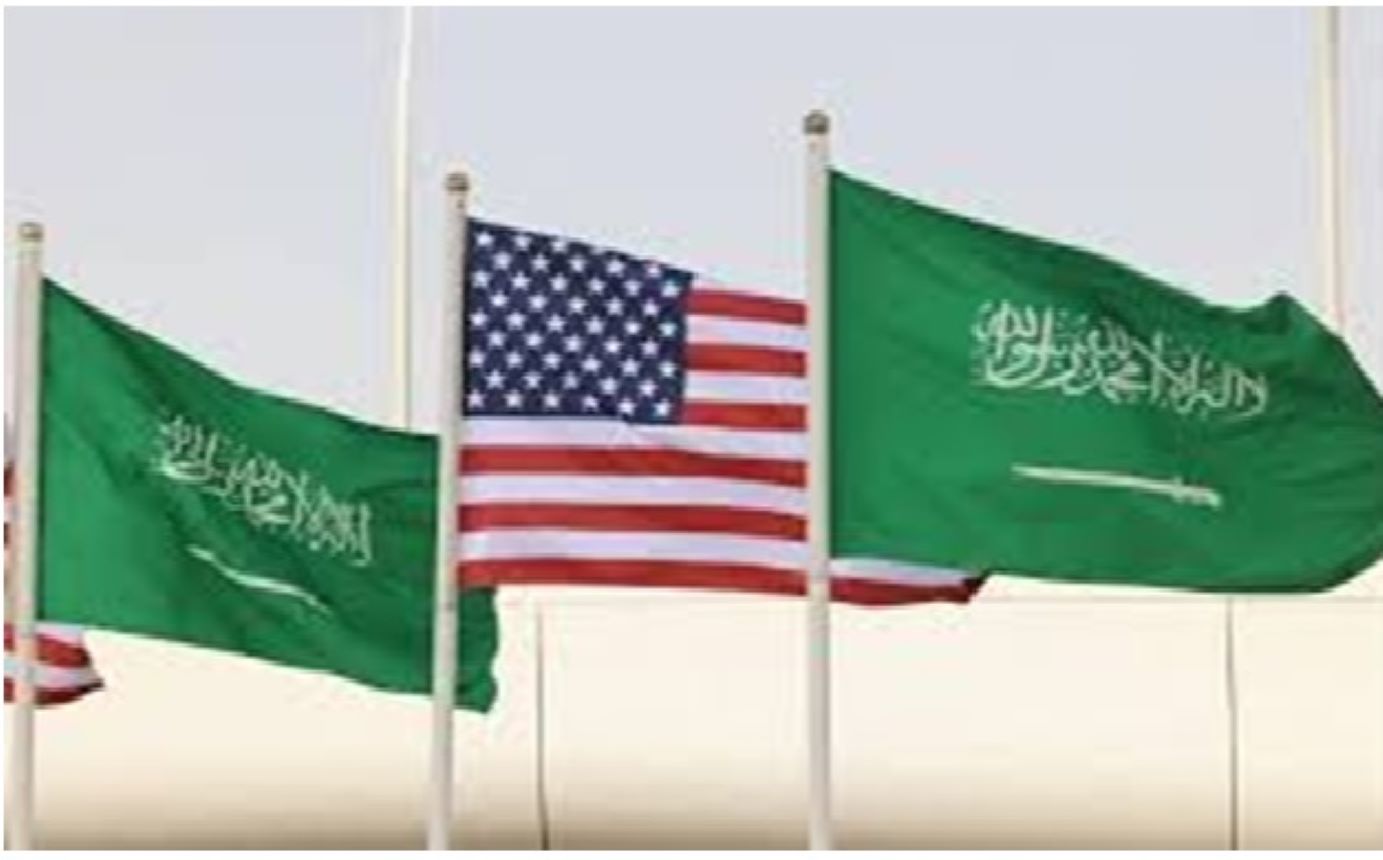
US–Saudi Arabia Sign Historic Civil
Nuclear Cooperation ("123 Agreement")
The United States and Saudi Arabia have signed a
historic Civil Nuclear Cooperation Agreement, commonly known as the "123
Agreement." The pact paves the way for US participation in Saudi Arabia's
civilian nuclear energy programme while addressing key concerns related to
nuclear non-proliferation, regional security, and strategic stability in the
Middle East.
More on the News
¨
The agreement establishes
a 30-year framework for peaceful nuclear cooperation under Section 123 of the
US Atomic Energy Act, 1954.
¨
It enables US companies
to participate in Saudi Arabia’s planned civilian nuclear programme by
supplying nuclear reactors, technology and related services.
¨
It will now be submitted
to the US Congress for statutory review before entering into force.
¨
While the agreement
leaves open the possibility of domestic uranium enrichment in Saudi Arabia, a
joint US-Saudi study will assess its technical and economic feasibility before
any future decision.
Understanding the Agreement
What is a 123 Agreement?
¨
A 123 Agreement is a
bilateral civilian nuclear cooperation agreement under Section 123 of the US
Atomic Energy Act, 1954, providing the legal framework for the transfer of US
nuclear materials, equipment and technology for peaceful purposes.
¨
It does not itself
authorise reactor construction or technology transfer; rather, it enables
future nuclear cooperation subject to regulatory approvals and licensing
requirements.
¨
Such agreements require
commitments relating to peaceful use, IAEA safeguards, nuclear security and non-proliferation.
¨
The US has concluded
similar agreements with several countries, including India (2008), Japan, South
Korea and the UAE.
Why does Saudi Arabia seek Civil Nuclear
Energy?
¨
To diversify its energy
mix under Vision 2030 by reducing dependence on oil-fired electricity
generation.
¨
To meet rising
electricity demand driven by industrialisation, urbanisation and desalination,
while freeing more crude oil for export.
¨
To strengthen long-term
energy security and develop indigenous nuclear expertise by utilising its
uranium resources.
Non-Proliferation Context
¨
Saudi Arabia is a
Non-Nuclear Weapon State (NNWS) under the Treaty on the Non-Proliferation of
Nuclear Weapons (NPT), therefore prohibited from developing or acquiring
nuclear weapons.
¨
The country has a
Comprehensive Safeguards Agreement (CSA) with the International Atomic Energy
Agency (IAEA) but has not brought the IAEA Additional Protocol into force,
which would provide the Agency with broader inspection powers and enhanced
verification measures.
¨
The agreement also
envisages a bilateral US-Saudi safeguards arrangement, reviving debate over the
adequacy of existing safeguards if Saudi Arabia eventually develops domestic
uranium enrichment capabilities.
How is it Different from Previous US
Nuclear Agreements?
¨
Unlike the UAE-US Civil
Nuclear Agreement (2009)—the “gold standard”, under which the UAE permanently
renounced uranium enrichment and spent-fuel reprocessing—the Saudi agreement
leaves open the possibility of future domestic uranium enrichment, subject to
feasibility assessments and agreed safeguards.
¨
It also differs from the
India-US Civil Nuclear Agreement (2008), which was enabled through a special
Nuclear Suppliers Group (NSG) waiver despite India remaining outside the NPT.
Significance of the Agreement
¨
Strengthens US-Saudi
Strategic Partnership: The agreement deepens long-term cooperation in energy,
advanced technology and strategic sectors, reinforcing US engagement in West
Asia.
¨
Supports Saudi Arabia’s
Energy Transition: It advances the Kingdom’s Vision 2030 objective of
establishing a civilian nuclear power programme while diversifying its energy
sources.
¨
Reinforces US Leadership
in Civil Nuclear Energy: The agreement expands opportunities for American
nuclear technology exports, strengthens US industrial supply chains and
reinforces Washington’s strategic influence amid growing competition from China
and Russia.
¨
Promotes Low-Carbon
Energy Transition: Civil nuclear power can provide reliable, low-carbon
baseload electricity, complementing renewable energy and supporting long-term
decarbonisation efforts.