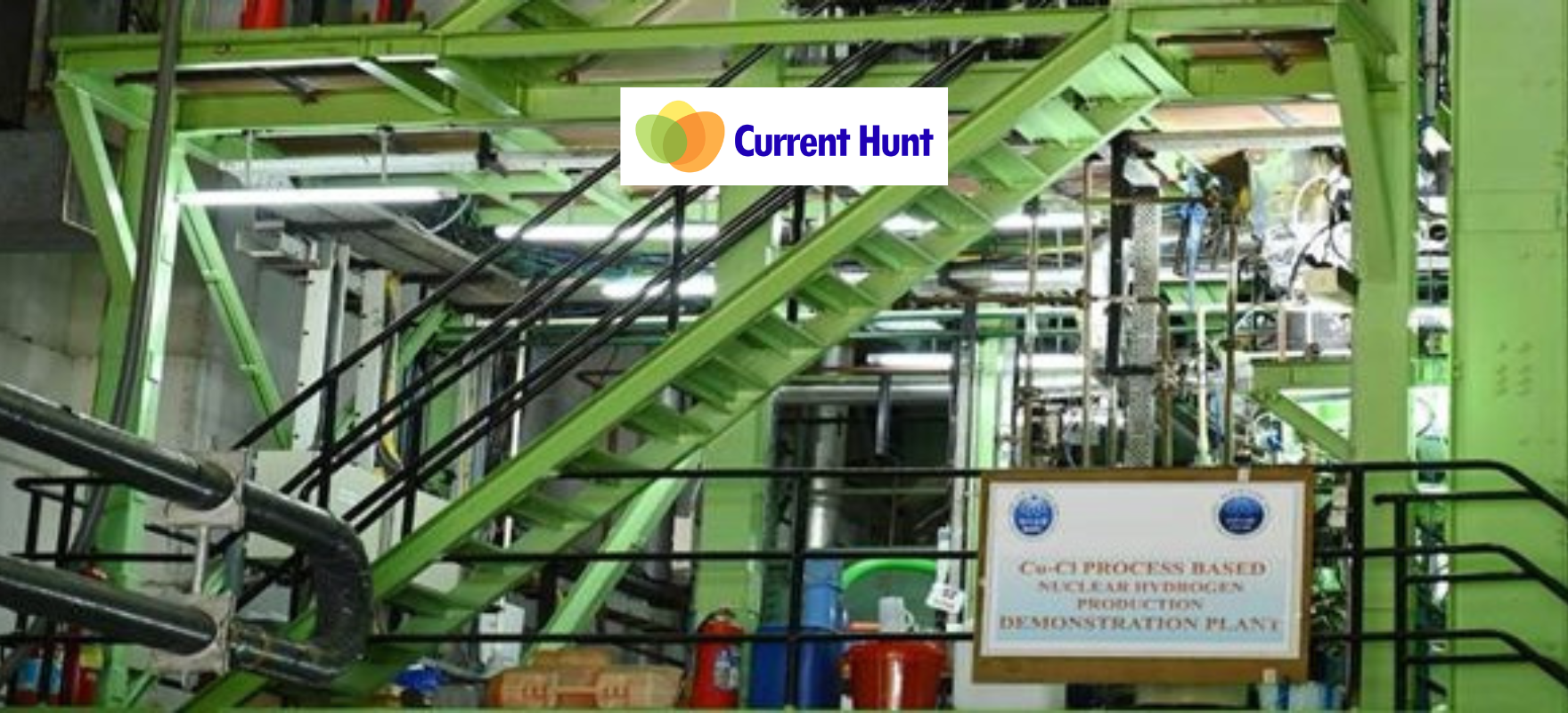
World's First Copper–Chlorine-Based Nuclear Hydrogen Production Facility Inaugurated at Kalpakkam
India has achieved another historic milestone in clean energy and nuclear technology with the inauguration of the world's first Copper–Chlorine (Cu–Cl) Thermochemical Cycle-based Nuclear Hydrogen Production Facility at Kalpakkam, Tamil Nadu.
The project has been launched by the Department of Atomic Energy (DAE) and marks a significant step towards sustainable, carbon-free hydrogen production. The facility uses nuclear process heat from the Fast Breeder Test Reactor (FBTR) located at the Indira Gandhi Centre for Atomic Research (IGCAR).
Developed through the collaborative efforts of Bhabha Atomic Research Centre (BARC), Mumbai, and IGCAR, this innovative technology demonstrates India's growing leadership in advanced nuclear energy and green hydrogen production.
Why is this News Important?
The inauguration of this facility is a landmark achievement because it is the first successful demonstration anywhere in the world of hydrogen production using the Copper–Chlorine thermochemical cycle powered by nuclear reactor heat. This breakthrough supports India's clean energy goals, reduces dependence on fossil fuels, and strengthens the country's ambition to become a global leader in hydrogen technologies.
What is the Nuclear Hydrogen Production Facility?
The Hydrogen Production Facility is a technology demonstration plant designed to validate the indigenous Copper–Chlorine (Cu–Cl) Thermochemical Cycle developed by BARC. Unlike conventional hydrogen production methods that depend heavily on fossil fuels, this system utilizes the high-temperature heat generated by the Fast Breeder Test Reactor (FBTR) to split water into hydrogen and oxygen without releasing carbon dioxide. The project successfully integrates advanced nuclear technology with hydrogen generation, paving the way for large-scale production of clean hydrogen.
Key Features of the Hydrogen Production Facility
- World's first hydrogen production plant using the Copper–Chlorine (Cu–Cl) Thermochemical Cycle with nuclear reactor heat.
- Located at IGCAR, Kalpakkam, Tamil Nadu.
- Uses thermal energy from the Fast Breeder Test Reactor (FBTR).
- Based entirely on indigenous technology developed by BARC.
- Jointly implemented by BARC and IGCAR.
- Produces carbon-free hydrogen without greenhouse gas emissions.
- Demonstrates the feasibility of continuous hydrogen production using nuclear energy.
Objectives of the Facility
The demonstration plant has been established to:
- Validate the indigenous Cu–Cl hydrogen production technology.
- Generate operational and engineering performance data.
- Improve process efficiency through continuous optimization.
- Support future commercial-scale nuclear-assisted hydrogen production.
- Strengthen India's hydrogen economy and clean energy ecosystem.
What is the Copper–Chlorine (Cu–Cl) Thermochemical Cycle?
The Copper–Chlorine Thermochemical Cycle is an advanced hydrogen production technology that splits water into hydrogen and oxygen through a sequence of chemical reactions involving copper and chlorine compounds.
Instead of burning fossil fuels, the process uses high-temperature heat supplied by a nuclear reactor. During the process, copper and chlorine compounds are continuously recycled, making the technology energy-efficient and environmentally friendly. The entire technology has been developed indigenously by the Bhabha Atomic Research Centre (BARC).
How Does the Cu–Cl Process Work?
The process involves multiple thermochemical reactions where:
- Water acts as the raw material.
- Copper and chlorine compounds function as recyclable chemical intermediates.
- High-temperature heat from the Fast Breeder Test Reactor drives the reactions.
- Water molecules ultimately split into hydrogen and oxygen.
- The recycled chemicals are reused repeatedly, improving efficiency and minimizing waste.
Since nuclear reactors provide uninterrupted heat, hydrogen can be produced throughout the day without interruption.
Why is the Cu–Cl Thermochemical Cycle Special?
The Copper–Chlorine cycle is considered one of the most promising hydrogen production technologies because it offers several advantages over conventional methods.
Major Advantages:
- Lower operating temperatures than many competing thermochemical cycles.
- Higher thermodynamic efficiency.
- Reduced overall energy consumption.
- Continuous hydrogen production.
- Better utilization of nuclear process heat.
- Minimal greenhouse gas emissions.
- Lower dependence on fossil fuels.
- Production of Pink Hydrogen using nuclear energy.
What is Pink Hydrogen?
Pink Hydrogen refers to hydrogen produced using nuclear energy. Unlike Grey Hydrogen, which is produced from natural gas and emits carbon dioxide, Pink Hydrogen is generated using nuclear heat or electricity and is considered a carbon-free fuel. As countries move towards Net Zero emissions, Pink Hydrogen is emerging as an important clean energy solution for industries, transport, fertilizer production, and power generation.
Significance of the Facility
- Global First: India has become the first country in the world to demonstrate hydrogen production through the Copper–Chlorine thermochemical cycle using nuclear reactor heat.
- Boost to Clean Energy: The project provides a completely carbon-free pathway for hydrogen production and supports India's transition towards clean energy.
- Strengthening Energy Security: Hydrogen produced through indigenous nuclear resources can reduce India's dependence on imported oil, gas, and coal.
- Technological Leadership: The successful integration of nuclear reactors with hydrogen production establishes India among the global leaders in advanced nuclear technologies.
- Commercial Opportunities: Operational experience from this demonstration plant will help develop commercial-scale hydrogen production facilities in the future.
- Expanding the Role of Nuclear Energy: The project highlights that fast breeder reactors can be utilized not only for electricity generation but also for producing clean industrial fuels.
- Promoting Indigenous Innovation: The achievement reflects the advanced scientific capabilities of BARC and IGCAR in nuclear engineering and sustainable energy technologies.
- Supporting India's Three-Stage Nuclear Programme: The experience gained from the Fast Breeder Test Reactor contributes to future development of the 500 MWe Prototype Fast Breeder Reactor (PFBR) and strengthens India's long-term nuclear energy strategy.
- Advancing Atmanirbhar Bharat: The indigenous development of this technology supports the vision of Atmanirbhar Bharat, technological self-reliance, and Viksit Bharat.
Institutions Involved
|
Organization |
Role |
|
Department of
Atomic Energy (DAE) |
Overall implementation
and inauguration |
|
Bhabha Atomic
Research Centre (BARC), Mumbai |
Developed the indigenous Cu–Cl
process |
|
Indira Gandhi
Centre for Atomic Research (IGCAR), Kalpakkam |
Established and
operates the demonstration facility |
|
Fast Breeder Test
Reactor (FBTR) |
Supplies high-temperature
nuclear process heat |
Quick Revision Points:
- Location: Kalpakkam, Tamil Nadu
- Facility: World's First Nuclear Hydrogen Production Plant using Cu–Cl Cycle
- Heat Source: Fast Breeder Test Reactor (FBTR)
- Technology: Copper–Chlorine Thermochemical Cycle
- Developer: Bhabha Atomic Research Centre (BARC)
- Implementation: BARC and IGCAR
- Hydrogen Produced: Pink Hydrogen
- Energy Source: Nuclear Process Heat
- Key Benefit: Carbon-free hydrogen production
- Major Achievement: First country to demonstrate Cu–Cl cycle using nuclear reactor heat
Frequently Asked Questions (FAQs)
Q1. Where has the world's first Copper–Chlorine-based Nuclear Hydrogen Production Facility been inaugurated?
Answer: Kalpakkam, Tamil Nadu.
Q2. Which organization developed the Cu–Cl Thermochemical Cycle?
Answer: Bhabha Atomic Research Centre (BARC), Mumbai.
Q3. Which reactor supplies heat for hydrogen production?
Answer: Fast Breeder Test Reactor (FBTR).
Q4. What type of hydrogen is produced through this technology?
Answer: Pink Hydrogen.
Q5. Why is this project important?
Answer: It demonstrates carbon-free hydrogen production using nuclear energy, strengthens India's clean energy transition, enhances energy security, and establishes India as the first country to successfully implement this technology.
Conclusion
The inauguration of the world's first Copper–Chlorine-based Nuclear Hydrogen Production Facility at Kalpakkam represents a major leap in India's clean energy journey. By combining advanced nuclear technology with indigenous scientific innovation, India has demonstrated a practical pathway for producing carbon-free hydrogen at scale.
Beyond strengthening the nation's energy security, this achievement reinforces India's commitment to sustainable development, technological self-reliance, and achieving its long-term climate goals. For competitive exam aspirants, this development is an important current affairs topic linking nuclear technology, hydrogen economy, renewable transition, and national energy policy.