Ballista Spider: Newly Discovered Spider Species Uses a Silk-Powered Catapult to Hunt Ants
Nature never ceases to amaze scientists. In a fascinating discovery from the tropical rainforests of northern Australia, researchers have identified a previously unknown spider species that employs one of the most extraordinary hunting techniques ever observed.
Popularly known as the Ballista Spider, this tiny arachnid uses a spring-loaded silk trap that launches its prey with incredible force, showcasing one of nature's most advanced examples of biological engineering.
This remarkable discovery has generated significant interest among scientists and is also an important topic for UPSC, SSC, Banking, Railways, Defence, State PCS, and other competitive examinations.
What is the Ballista Spider?
The Ballista Spider is a newly discovered species found in the rainforests of far north Queensland, Australia. Although scientists have not yet assigned it an official scientific name, it belongs to the genus Propostira under the Theridiidae family, commonly known as cobweb spiders.
The nickname "Ballista Spider" comes from its unique hunting method, which resembles a ballista, an ancient mechanical weapon that launched projectiles using stored energy.
Key Highlights of the Discovery:
- A new spider species has been discovered in the tropical rainforests of far north Queensland, Australia.
- It belongs to the genus Propostira of the Theridiidae (cobweb spider) family.
- The species has not yet received an official scientific name.
- It constructs irregular cobwebs similar to other members of its genus.
- Scientists have nicknamed it the Ballista Spider because of its powerful silk-powered hunting mechanism.
Unique Hunting Mechanism
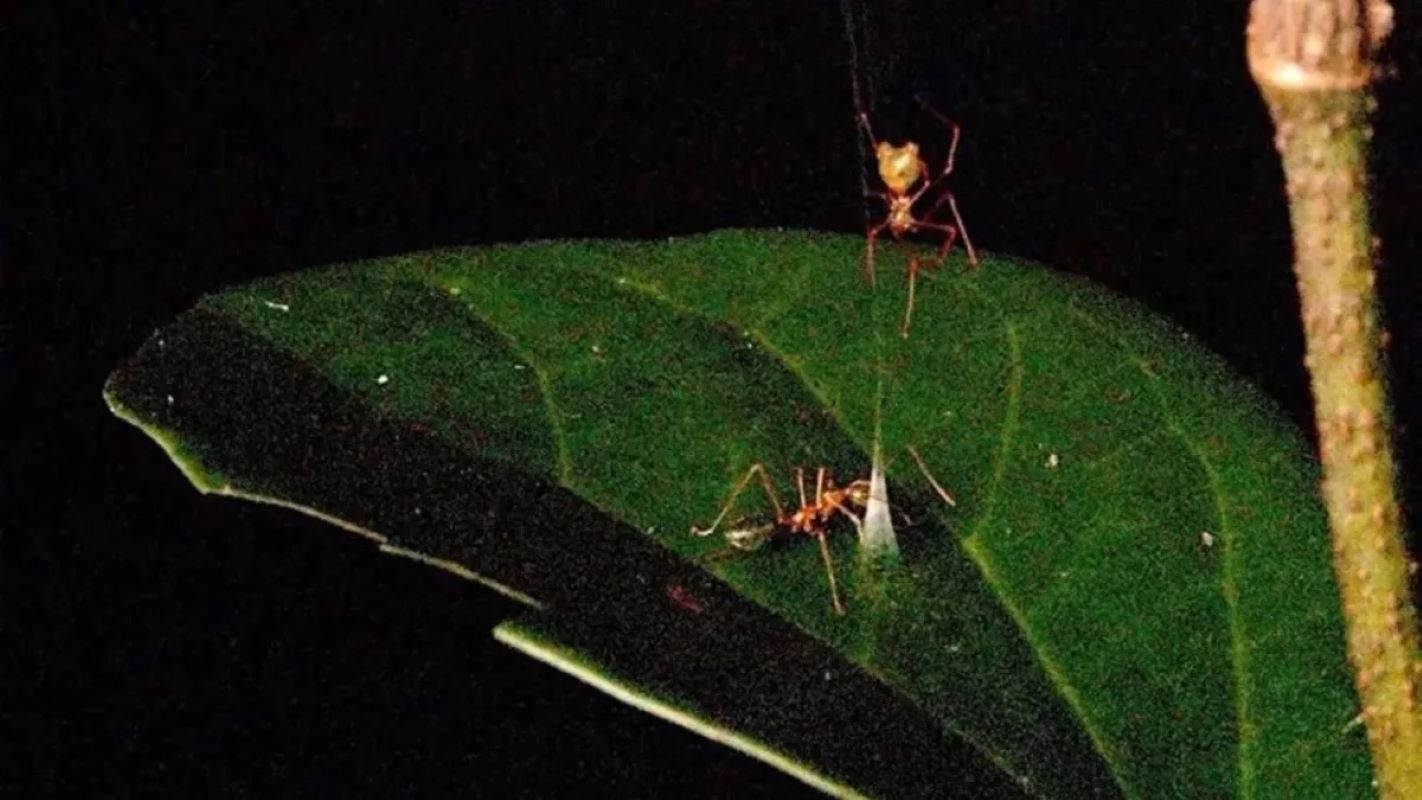
What makes the Ballista Spider truly extraordinary is its highly specialized prey-capturing strategy. Instead of chasing insects, the spider builds a spring-loaded silk trap designed specifically to catch green tree ants (Oecophylla smaragdina).
How Does the Trap Work?
- The spider constructs a cone-shaped silk structure under tension.
- A green tree ant bites the silk cone while exploring.
- This action instantly releases the stored elastic energy within the silk.
- The silk launches the ant at extremely high speed, allowing the spider to capture it almost instantly.
This sophisticated mechanism is one of the rare examples of elastic energy storage being used in spider hunting behavior.
Incredible Speed and Force
Researchers recorded astonishing performance from the silk trap.
- The launched ants experienced an acceleration of up to 1,367 metres per second squared (m/s²).
- This is approximately 140 times Earth's gravitational force (140 g).
- It is also nearly 15 times greater than the acceleration experienced by fighter pilots during high-speed maneuvers.
Such powerful acceleration demonstrates the remarkable efficiency of spider silk as a natural energy-storage material.
How Was the Discovery Made?
The spider's unusual hunting behaviour was first noticed in 2022 by biomedical researcher Greg Anderson while exploring the rainforests of far north Queensland.
Later, in early 2023, Professor Ajay Narendra and postgraduate researcher Pranav Joshi conducted detailed observations using high-speed and infrared cameras. Their recordings captured the spider's lightning-fast hunting strategy in unprecedented detail.
Researchers from Macquarie University and the University of Greifswald later analyzed the findings and published the study in the prestigious scientific journal Current Biology.
Scientific Importance of the Discovery
The Ballista Spider highlights the incredible diversity and innovation found in nature. Its silk-based hunting system demonstrates:
- Advanced biological engineering
- Efficient storage and rapid release of elastic energy
- Specialized predator-prey adaptations
- Potential inspiration for biomimetic technologies and engineering designs
According to Professor Ajay Narendra, the spider's silk functions like a tiny spring, storing elastic energy before releasing it almost instantly to trap its prey.
Why is this Discovery Important?
This discovery is significant because it:
- Reveals a previously unknown spider species.
- Expands scientific understanding of spider evolution and hunting behaviour.
- Demonstrates one of the fastest silk-powered prey capture mechanisms known.
- Highlights the importance of conserving Australia's rich rainforest biodiversity.
- Provides valuable insights for future research in biomechanics and biomimicry.
Ballista Spider: Quick Facts
|
Feature |
Details |
|
Discovery
Location |
Far North Queensland,
Australia |
|
Nickname |
Ballista Spider |
|
Genus |
Propostira |
|
Family |
Theridiidae (Cobweb Spider) |
|
Official
Scientific Name |
Yet to be assigned |
|
Main Prey |
Green Tree Ant (Oecophylla
smaragdina) |
|
Hunting Method |
Spring-loaded silk
trap |
|
Maximum Recorded
Acceleration |
1,367 m/s² |
|
Gravity
Equivalent |
Approximately 140 g |
|
Research Published
In |
Current Biology |
Conclusion
The discovery of the Ballista Spider showcases yet another extraordinary adaptation from the natural world. By using a silk-powered catapult mechanism capable of generating forces far beyond those experienced by fighter pilots, this tiny spider demonstrates the remarkable sophistication of evolutionary design.
For competitive exam aspirants, this discovery is an important addition to current affairs, especially under the topics of Science & Technology, Environment & Biodiversity, and International Current Affairs
 under the Ramsar Convention.jpg)