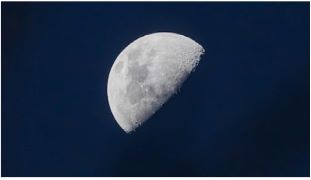
An international team of scientists
published research in April 2026 in the journal Astrodynamics on a fuel-saving Earth-to-Moon
transfer trajectory
¨
An international team of
scientists published research in April 2026 in the journal Astrodynamics on a
fuel-saving Earth-to-Moon transfer trajectory.
¨
The study involved
researchers from the University of São Paulo (Brazil) and the University of
Coimbra (Portugal).
¨
The lead author was Alan
Kardec de Almeida Junior, and the co-author was Vítor Martins de Oliveira.
¨
Earth-to-Moon travel uses
transfer trajectories based on orbital mechanics and gravitational fields.
¨
Low delta-v (Δv)
trajectories require less fuel for spacecraft operations.
¨
The newly identified
route reduces fuel consumption by at least 58.8 m/s of delta-v compared to
previous optimal paths.
¨
The trajectory leverages
the gravitational influences of both Earth and the Moon.
¨
It is based on pathways
associated with the Interplanetary Transport Network.
¨
The route passes through
the far side of the Moon and utilizes regions around the Earth–Moon L1 Lagrange
point.
¨
Such low-energy transfer
routes have been used in past missions, including Japan’s Hiten probe (1991)
and NASA’s GRAIL mission.
¨
Researchers used advanced
computer modeling and functional analysis methods to simulate around 30 million
trajectories.
¨
Out of these, 280,000
cases were studied in detail.
¨
The proposed route
maintains continuous communication with Earth.
¨ It avoids signal blackouts that occur when spacecraft pass behind the Moon.
¨ The current model considers only the gravitational forces of Earth and the Moon.


, Jaipur, developed a low-cost sensor to detect minute amounts of toxic lead (Pb²⁺) ions in drinking water.jpg)