Bangladesh Becomes 27th Member of the International Big Cat Alliance (IBCA): Complete Current Affairs Notes 2026
Wildlife conservation has become one of the world's top environmental priorities. Strengthening international cooperation to protect endangered species is essential for maintaining biodiversity and ecological balance. In this direction, Bangladesh officially became the 27th member of the International Big Cat Alliance (IBCA) on 24 June 2026, marking another important milestone in global efforts to conserve the world's most iconic big cats.
The move further strengthens regional cooperation between India and Bangladesh, especially for the conservation of the Royal Bengal Tiger, which inhabits the shared Sundarbans ecosystem.
Bangladesh Joins the International Big Cat Alliance
Bangladesh formally joined the International Big Cat Alliance (IBCA) as its 27th member country on 24 June 2026. The decision reflects Bangladesh's commitment to protecting wildlife and enhancing cross-border cooperation for conserving endangered big cat species.
Before becoming a member, the Bangladesh Cabinet approved the proposal on 22 May 2026, following recommendations from the country's Ministry of Environment, Forest and Climate Change.
India had invited Bangladesh to become part of the alliance after high-level bilateral discussions held on 8–9 April 2026.
What is the International Big Cat Alliance (IBCA)?
The International Big Cat Alliance (IBCA) is a treaty-based intergovernmental international organization established to promote global cooperation for conserving the world's seven major big cat species. The alliance serves as a platform for member countries to collaborate in areas such as:
- Wildlife conservation
- Habitat restoration
- Scientific research
- Capacity building
- Knowledge sharing
- Anti-poaching measures
- Technology transfer
- Financial and technical cooperation
The organization is headquartered in New Delhi, India, and functions as an independent legal international entity.
Evolution of IBCA
The idea of creating a global alliance for big cat conservation was announced by Prime Minister Narendra Modi in April 2023 during the celebration of the 50th anniversary of Project Tiger.
Important Timeline
|
Year |
Event |
|
April 2023 |
IBCA launched during
the 50th anniversary of Project Tiger |
|
23 January 2025 |
Became a full-fledged
treaty-based international organization |
|
24 June 2026 |
Bangladesh became the
27th member nation |
Seven Big Cats Protected Under IBCA
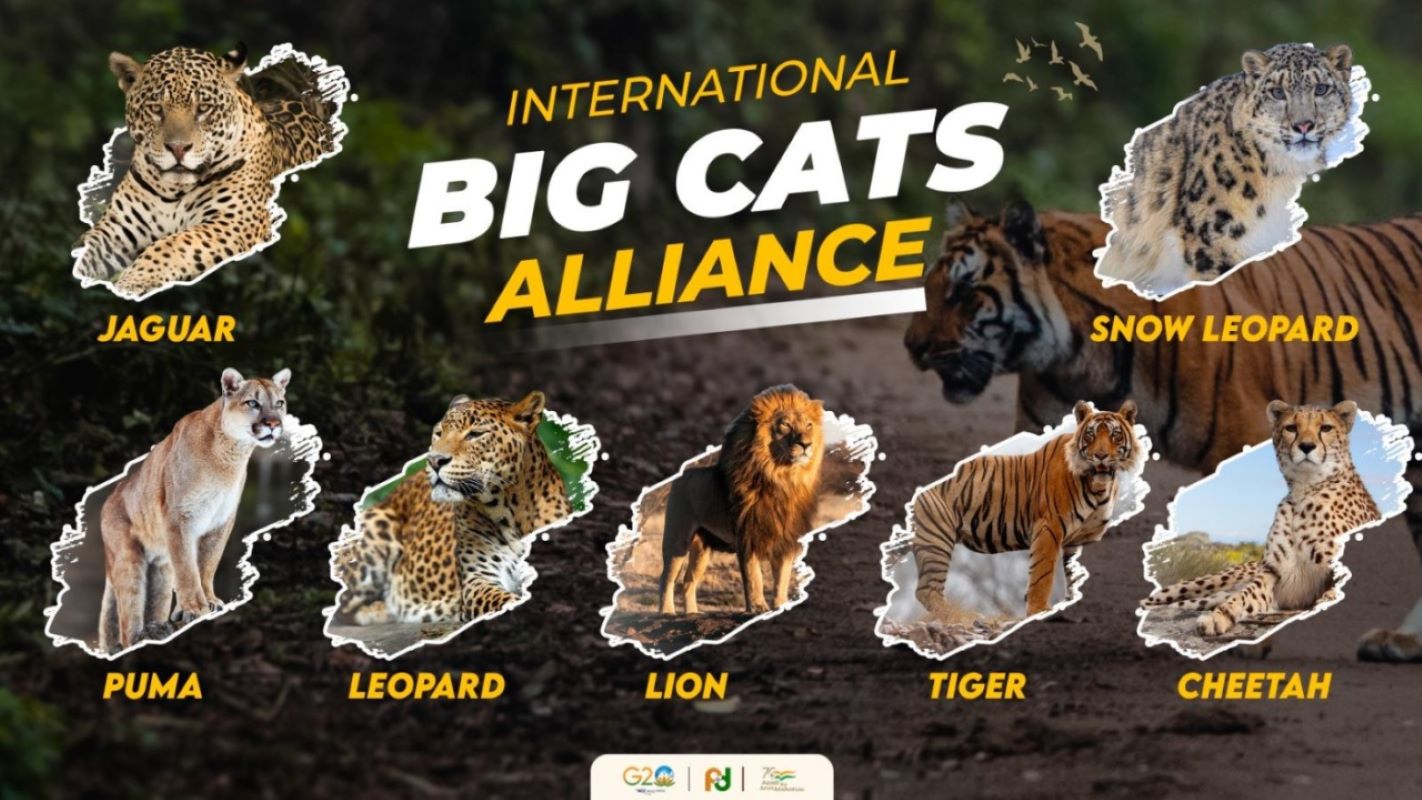
The alliance focuses on conserving the following seven big cat species:
- Tiger
- Lion
- Leopard
- Snow Leopard
- Cheetah
- Jaguar
- Puma
These species are distributed across different continents and face threats such as habitat loss, poaching, illegal wildlife trade, and climate change.
Why is Bangladesh's Membership Important?
Bangladesh's inclusion in IBCA carries significant ecological and strategic importance because it shares one of the world's most critical tiger habitats with India.
The two countries jointly protect the Sundarbans, home to the globally renowned Royal Bengal Tiger. With Bangladesh joining the alliance:
- Cross-border wildlife conservation will improve.
- Scientific collaboration between India and Bangladesh will increase.
- Joint anti-poaching efforts can become more effective.
- Conservation of the Sundarbans ecosystem will receive greater international support.
- Biodiversity protection in South Asia will be strengthened.
India-Bangladesh Cooperation on Wildlife Conservation
The invitation for Bangladesh to join the alliance emerged after bilateral discussions held on 8–9 April 2026. The discussions included:
- Pranay Verma, Indian High Commissioner to Bangladesh
- Abdul Awal Mintoo, Bangladesh's Minister for Environment, Forest and Climate Change
Both sides emphasized strengthening cooperation in biodiversity conservation, forest management, and protection of shared wildlife habitats.
Importance of the Sundarbans
The Sundarbans is one of the world's most ecologically significant regions.
Key Features
- World's largest mangrove forest
- Located in the Ganga–Brahmaputra–Meghna Delta
- Shared by India and Bangladesh
- Natural habitat of the Royal Bengal Tiger
- Home to numerous endangered birds, reptiles, mammals, and aquatic species
- Acts as a natural shield against cyclones and coastal erosion
The conservation of this fragile ecosystem is essential for both biodiversity and climate resilience.
Why is IBCA Important?
The International Big Cat Alliance aims to create a global framework for protecting big cats by promoting:
- International cooperation
- Conservation funding
- Wildlife research
- Sustainable habitat management
- Community participation
- Knowledge exchange
- Technological innovation
- Capacity building among member countries
Its long-term objective is to ensure the survival of big cat populations across the globe.
Exam-Oriented Quick Facts
|
Particular |
Details |
|
Event |
Bangladesh became the
27th member of IBCA |
|
Date |
24 June 2026 |
|
Alliance |
International Big Cat
Alliance (IBCA) |
|
Headquarters |
New Delhi, India |
|
Launched |
April 2023 |
|
Became
Treaty-Based Organization |
23 January 2025 |
|
Founder
Initiative |
Prime Minister
Narendra Modi |
|
Occasion of Launch |
50th Anniversary of Project
Tiger |
|
Number of Big Cat
Species Covered |
7 |
|
Shared Ecosystem |
Sundarbans |
|
Largest Mangrove
Forest |
Sundarbans |
|
Delta |
Ganga–Brahmaputra–Meghna Delta |
Conclusion
Bangladesh's entry as the 27th member of the International Big Cat Alliance is a significant step toward strengthening international wildlife conservation efforts. The partnership reinforces regional cooperation between India and Bangladesh while highlighting the global importance of protecting endangered big cat species and preserving the ecologically rich Sundarbans.
For competitive exam aspirants, this development is highly relevant from the perspectives of environment, biodiversity, international organizations, and current affairs.
 under the Ramsar Convention.jpg)