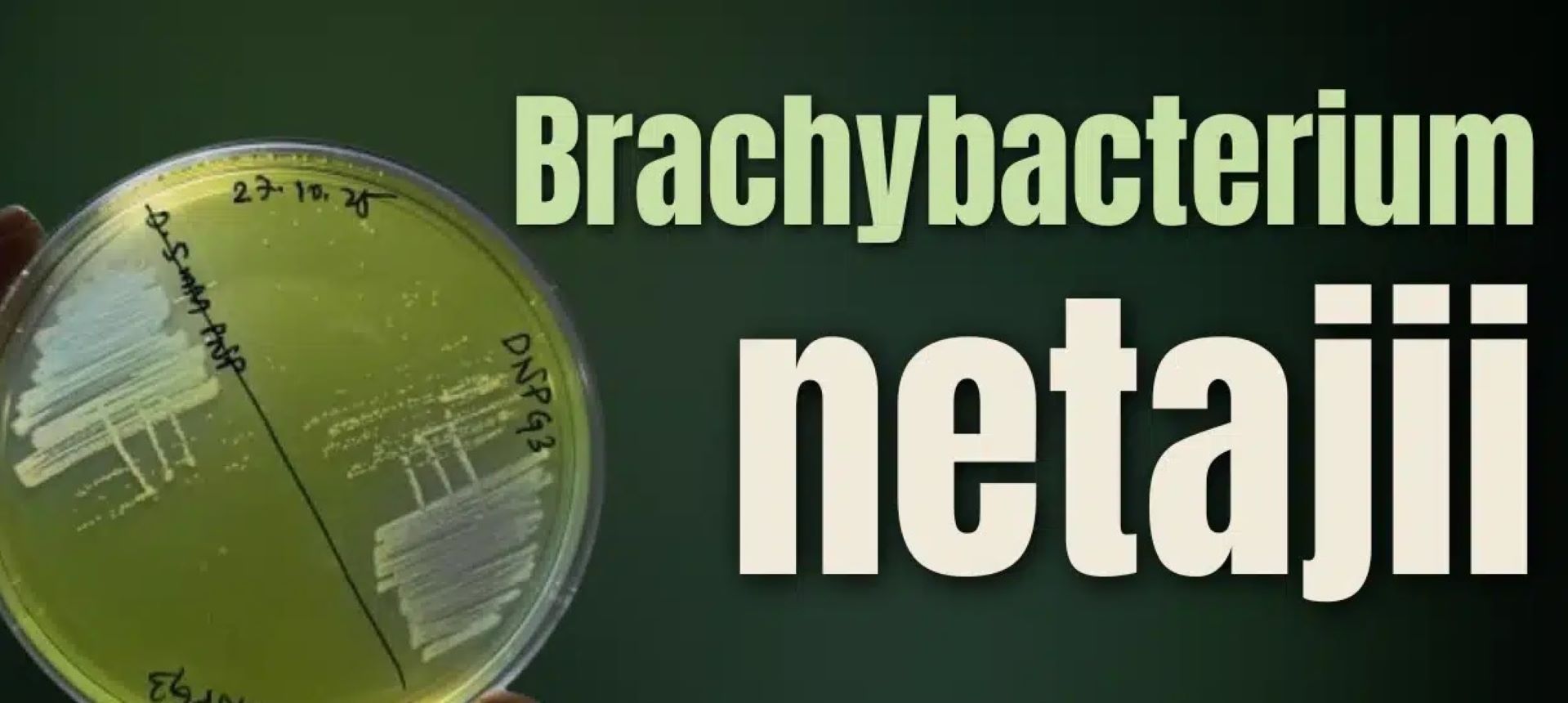
Brachybacterium netajii is a newly
identified bacterial species isolated from the Hooghly River in West Bengal,
India
¨
Brachybacterium netajii
is a newly identified bacterial species isolated from the Hooghly River in West
Bengal, India.
¨
The bacterial strain
DNPG3T was isolated from an area affected by industrial runoff.
¨
After polyphasic
taxonomic characterisation, it was proposed as Brachybacterium netajii sp. nov.
¨
The bacterium has
significant bioremediation potential.
¨
Bioremediation is the
process of using microorganisms, plants, or enzymes to break down pollutants
into less harmful substances.
¨
Brachybacterium netajii
can degrade p-nitrophenol (PNP), a toxic industrial chemical, into harmless
by-products.
¨
PNP is widely used in the
manufacture of dyes and pesticides.
¨ The bacterium can
tolerate high concentrations of heavy metals, including arsenic, cadmium, lead,
and mercury.
¨
It is halotolerant and
can survive in salt concentrations of up to 9%, making it suitable for coastal
and estuarine environments.
¨
The species belongs to
the genus Brachybacterium under the phylum Actinobacteria.
¨ Its cellular profile contains fatty acids such as C11:0 and C10:0 2-OH.
¨ Its genome contains genomic islands associated with stress-tolerance enzymes.


.jpg)