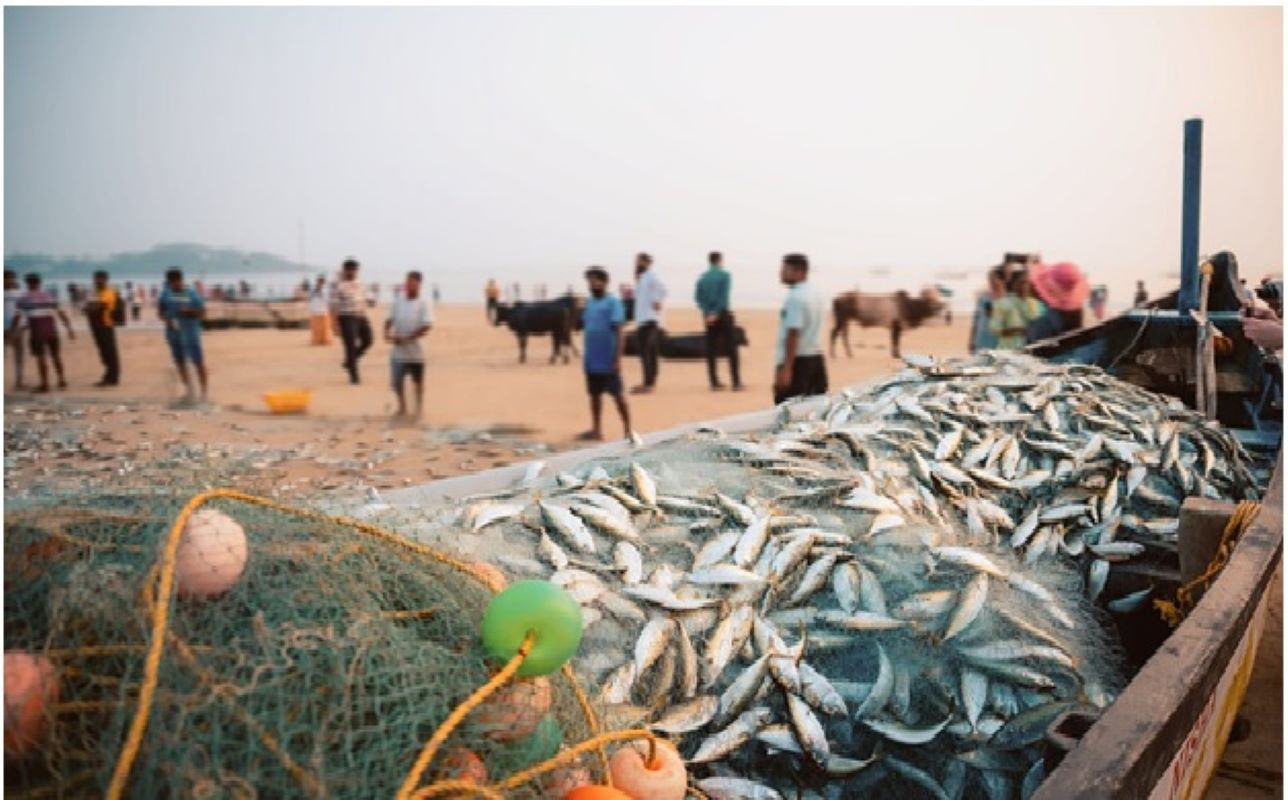
FAO Report 2026: India Becomes World's
Second-Largest Producer of Aquatic Animals
According to the Food and Agriculture Organization's
'The State of World Fisheries and Aquaculture 2026' (SOFIA 2026) report, India
emerged as the world's second-largest producer of aquatic animals in 2024.
Additionally, India secured the top global position in inland fisheries. This
reflects India's growing capacity and global leadership in the thriving
fisheries and aquaculture sector.Food and Agriculture Organization (FAO), in
its State of World Fisheries and Aquaculture 2026 report, stated that India
emerged as the world’s second-largest producer of aquatic animals in 2024 and
ranked first globally in inland capture fisheries.
Key Findings of the Report
India’s Global Position
¨
India produced 9% of the
world’s aquatic animals in 2024, making it the second-largest producer globally
after China.
¨
India recorded 2.2
million tonnes of inland capture fisheries production from rivers, lakes and
freshwater systems.
¨
It emerged as the world’s
largest producer of inland water catches.
¨
Bangladesh ranked second
with 1.4 million tonnes of inland catches.
India’s Performance in Aquaculture
¨
India ranked second
globally in aquaculture (farmed aquatic animals).
¨
It contributed 12% of
global aquaculture output.
Along with China, Indonesia, Viet Nam and
Bangladesh, India forms a group of five countries that account for:
¨
82% of global farmed
aquatic animal production
¨
84% of global aquaculture
output
Global Fisheries and Aquaculture
Production
¨
Global fisheries and
aquaculture production reached an all-time high of 235 million tonnes in 2024.
This included:
¨
195 million tonnes of
aquatic animals
¨
40 million tonnes of
algae
¨
Production increased by
5.2% compared to 2022.
Aquaculture Driving Growth
¨
Global aquaculture
production reached a record 142 million tonnes.
¨
Aquaculture has become
the main driver of growth in aquatic animal production worldwide.
¨
The top producers were
China, Indonesia, India, Viet Nam &
Bangladesh.
Sustainability Challenges
¨
The proportion of marine
fish stocks harvested within biologically sustainable levels declined from
64.5% in 2021 to 62.4% in 2023. This indicates increasing pressure on marine
ecosystems due to rising demand and overexploitation in some regions.
¨
Although 72.6% of total
landings from assessed fish stocks originated from sustainably managed
fisheries, FAO cautioned that long-term sustainability remains a major
challenge.
Key Concerns
¨
Declining health of
marine fish stocks
¨
Overexploitation of
marine resources
¨
Rising global demand for
aquatic foods
¨
Need for sustainable and
equitable growth in fisheries and aquaculture
Significance for India
¨ India’s performance demonstrates its emergence as a global fisheries and aquaculture powerhouse and reflects the success of initiatives promoting inland fisheries, aquaculture expansion, and Blue Economy development.
¨ The sector contributes significantly to food and nutritional security, supports rural livelihoods, enhances export earnings, and reinforces India’s position as a key contributor to global aquatic food production.


 scheme will continue until September 30, 2026.jpg)