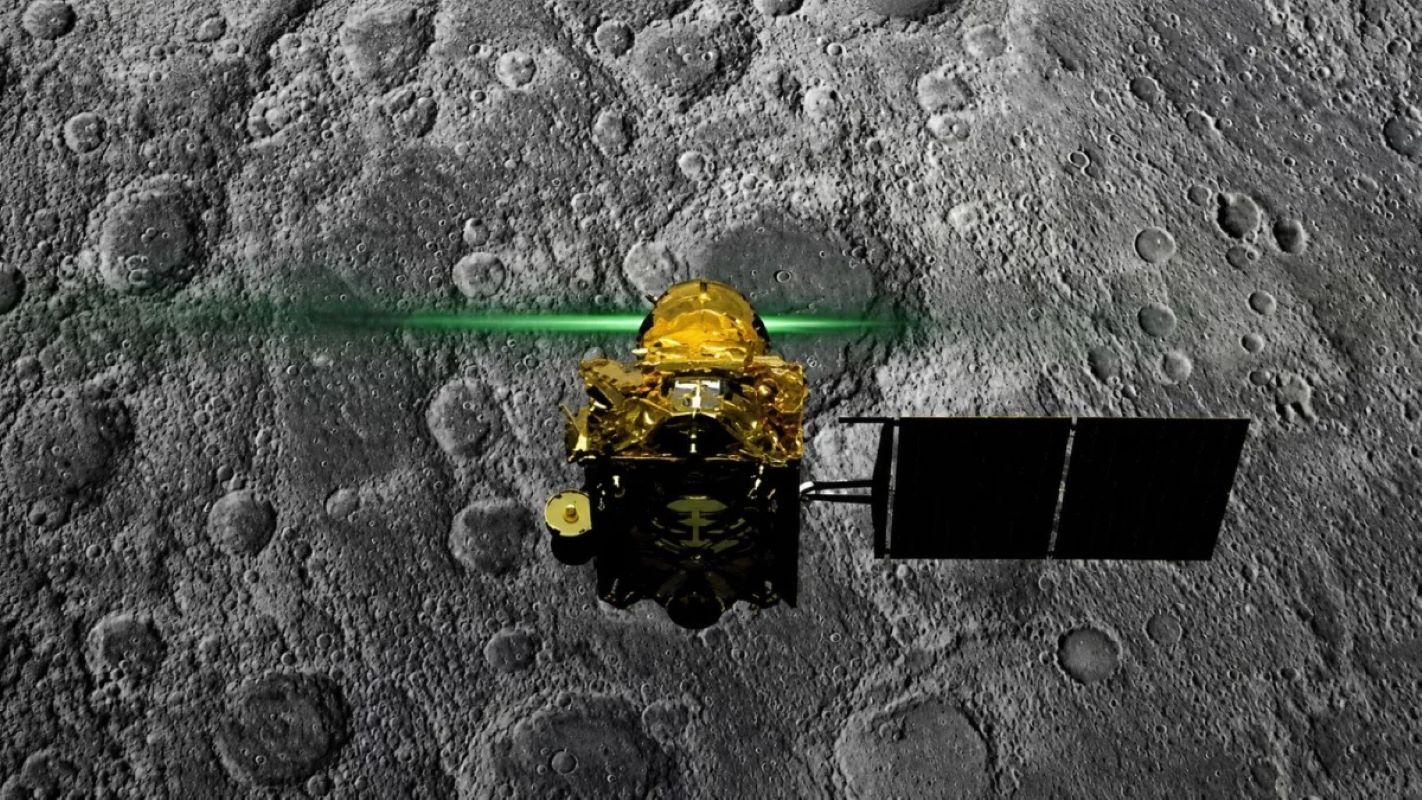
Shiv Shakti Point Soil Matches Ancient
Lunar Meteorite, Study Finds
A recent study based on data from Chandrayaan-3 has
revealed that the soil at Shiv Shakti Point has a chemical composition similar
to the ancient lunar meteorite ALHA 81005. The meteorite was discovered in the
Allan Hills region of Antarctica and is believed to have originated from the
Moon.Shiv Shakti Point is the landing site of the Chandrayaan-3 mission,
located near the Moon’s south pole. The region is of great scientific
importance because its surface and mineral composition provide valuable
insights into the Moon’s geological history and evolution.
More on the News
¨
Scientists from the Physical
Research Laboratory (PRL), Ahmedabad, analysed lunar soil using data collected
by the Alpha Particle X-ray Spectrometer (APXS) onboard the Pragyan rover.
¨
The study found that the
soil at Shiv Shakti Point is rich in iron and magnesium but relatively poor in
aluminium.
¨
Its composition was found
to be closest chemically to the lunar meteorite ALHA 81005, discovered in
Antarctica in 1982.
¨
The meteorite found in
Antarctica is composed 25.8% of aluminum oxide and 13.7% iron and magnesium
oxides. And this specific chemical composition is an almost exact match to the
soil measured by Chandrayaan-3 on the Moon.
¨
Researchers also
identified that the landing site lies in a transition zone between Ferroan
Anorthosite (representing the Moon’s primordial crust) and Magnesium Suite
(formed during later magmatic activity) rocks, representing different stages of
lunar crust formation.
¨
The findings provide one
of the first direct geochemical measurements from the lunar south polar region.
Significance of the Discovery
¨
Understanding Lunar
Evolution: The presence of both FAN and Mg-suite signatures suggests that the
south polar region preserves evidence of multiple stages of lunar crust
formation and geological evolution.
¨
Insights into the South
Pole–Aitken Basin: The findings support the view that the giant impact
responsible for the South Pole–Aitken (SPA) Basin excavated deep crustal
materials and redistributed them across the lunar south polar region.
¨
Linking Meteorites to
Source Regions: The close geochemical similarity between Shiv Shakti Point soil
and ALHA 81005 provides important clues regarding the possible origin and
geological context of lunar meteorites found on Earth.
¨
Validation of In-Situ
Exploration: The study demonstrates the value of direct surface investigations
in complementing orbital observations and meteorite studies, thereby
strengthening planetary science research.
Implications for Future Lunar Exploration
¨
Scientific Exploration of
the Lunar South Pole: The discovery reinforces the scientific importance of the
lunar south polar region, which is considered a priority destination for future
exploration because of its unique geology and potential water-ice reserves.
¨ Future Sample-Return Missions: The findings can help identify scientifically significant locations for future sample-return missions aimed at understanding the Moon’s crustal composition and evolution.
¨ Strengthening International Lunar Missions: The results will contribute to upcoming missions such as the Lunar Polar Exploration Mission (LUPEX) and enhance global efforts to study the Moon’s geology through a combination of remote sensing, meteorite analysis, and in-situ measurements.



 scheme will continue until September 30, 2026.jpg)