Chenab–Beas Link Tunnel Project 2026: A Major River Linking Initiative in Himachal Pradesh
India has taken a significant step towards strengthening water resource management and clean energy generation with the approval of the Chenab–Beas Link Tunnel Project in May 2026. The project is expected to improve the utilization of surplus river water, enhance hydropower generation, and promote sustainable river basin management in Himachal Pradesh.
For aspirants preparing for UPSC, SSC, State PCS, Banking, Railways, Defence, and other competitive examinations, this project is highly important as it is linked to the Indus River System, hydropower development, water resource management, and the Indus Waters Treaty.
What is the Chenab–Beas Link Tunnel Project?
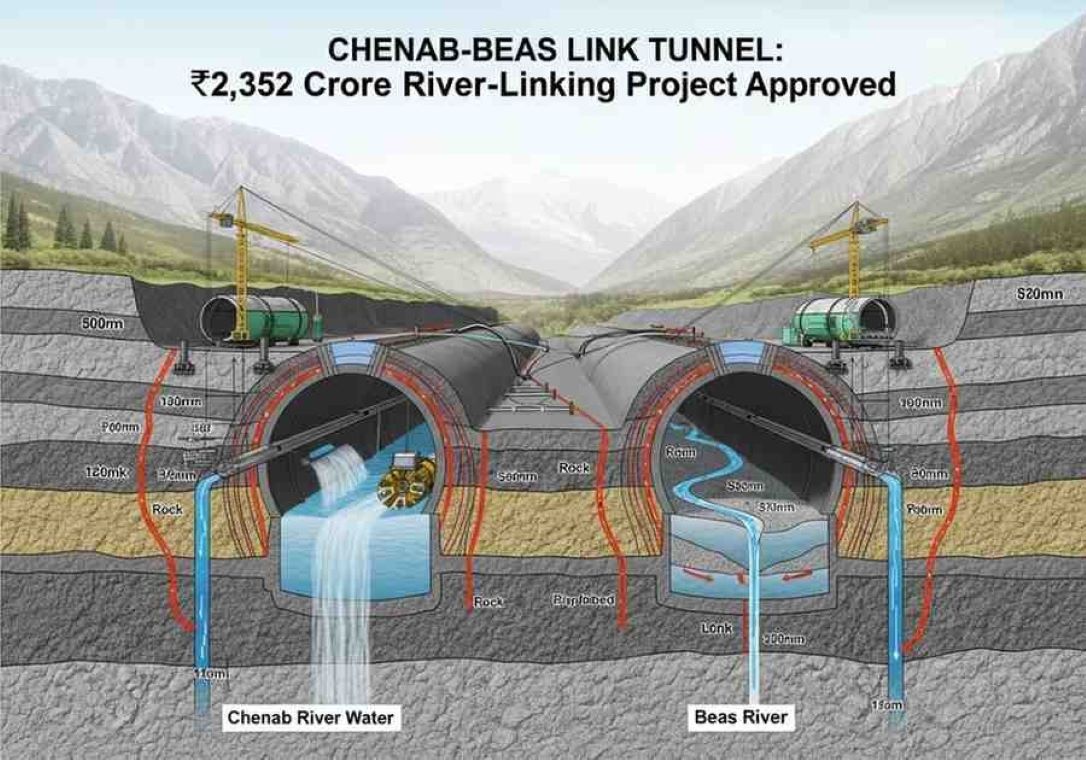
The Chenab–Beas Link Tunnel Project is a major river-linking and water management initiative proposed in Himachal Pradesh. The project aims to divert surplus water from the Chenab Basin to the Beas River system through an underground tunnel, ensuring optimal utilization of available water resources. The total estimated cost of the project is ₹2,352 crore.
Key Highlights of the Project
- Approved by the Government of India in May 2026.
- Estimated project cost: ₹2,352 crore.
- Includes the construction of an 8.7-kilometre tunnel.
- The tunnel will transfer surplus water from the Chenab Basin to the Beas River system.
- The first phase involves the construction of a 19-metre-high dam on the Chandra River near Koksar village in the Lahaul Valley.
- The project will be implemented by NHPC Limited.
- It is expected to generate approximately 4,000 MW of additional hydropower capacity in Himachal Pradesh.
- The project focuses on improving water resource utilization, strengthening river basin management, and increasing renewable energy generation.
Why is the Project Important?
The Chenab–Beas Link Tunnel Project is expected to deliver multiple long-term benefits for India's water and energy sectors.
Better Utilization of Water Resources
The project will help channel surplus water from the Chenab Basin to areas where it can be effectively utilized, reducing water wastage.
Boost to Hydropower Generation
By creating additional hydropower infrastructure, the project is expected to add around 4,000 MW of clean electricity generation capacity, contributing to India's renewable energy goals.
Strengthening River Basin Management
The project supports integrated river basin planning by enabling efficient distribution and management of water resources across river systems.
Enhancing Energy Security
Additional hydropower capacity will help meet the growing electricity demand while reducing dependence on fossil fuels.
Strategic Significance
The project is also viewed as part of India's broader strategy to maximize the utilization of water available within the Indus River Basin, making it strategically significant.
Chandra River: An Important Tributary
The Chandra River is one of the principal tributaries of the upper Chenab Basin in the western Himalayas. Originating in Himachal Pradesh, it flows through the Lahaul Valley and later joins the Bhaga River to form the Chenab River. The proposed 19-metre-high dam will be constructed on this river during the first phase of the project.
Indus River System
The Chenab–Beas Link Tunnel Project is directly associated with the Indus River System, one of South Asia's most important river networks. The major rivers of the Indus system include:
- Indus
- Jhelum
- Chenab
- Ravi
- Beas
- Sutlej
These rivers play a vital role in irrigation, drinking water supply, hydropower generation, and agriculture in both India and Pakistan.
Indus Waters Treaty
The Indus Waters Treaty is a landmark water-sharing agreement signed between India and Pakistan in 1960 with the mediation of the World Bank. The treaty governs the sharing and management of the waters of the Indus River System between the two countries.
Important Facts:
- Signed in 1960.
- Brokered by the World Bank.
- Regulates water-sharing between India and Pakistan.
- India suspended the treaty in April 2025, following changing strategic and security considerations.
Against this backdrop, the Chenab–Beas Link Tunnel Project is widely seen as an initiative to optimize India's utilization of water resources within the Indus Basin while remaining focused on domestic water management and hydropower development.
Expected Benefits of the Project:
- Efficient Water Management: The project will facilitate better use of surplus water that would otherwise remain underutilized.
- Higher Hydropower Capacity: An estimated 4,000 MW of additional hydropower generation will strengthen India's renewable energy infrastructure.
- Sustainable River Basin Development: Improved inter-basin water management will contribute to sustainable planning and conservation of water resources.
- Economic Growth: The project is expected to generate employment opportunities during construction and operation while supporting regional infrastructure development.
- Long-Term Water and Energy Security: Efficient utilization of river water and increased clean energy production will contribute to India's long-term developmental goals.
Competitive Exam Quick Facts
|
Particular |
Details |
|
Project |
Chenab–Beas Link
Tunnel Project |
|
Approval |
May 2026 |
|
State |
Himachal Pradesh |
|
Estimated Cost |
₹2,352 crore |
|
Tunnel Length |
8.7 km |
|
First Phase |
19-metre-high dam on the Chandra
River |
|
Location |
Koksar Village, Lahaul
Valley |
|
Implementing
Agency |
NHPC Limited |
|
Expected
Hydropower Capacity |
Approximately 4,000 MW |
|
Associated River
System |
Indus River System |
|
Indus Waters
Treaty Signed |
1960 |
|
Treaty Suspended
by India |
April 2025 |
Conclusion:
The Chenab–Beas Link Tunnel Project marks a significant milestone in India's efforts to strengthen water resource management, renewable energy generation, and river basin development. By diverting surplus water from the Chenab Basin to the Beas River system, the project aims to improve water utilization while creating approximately 4,000 MW of additional hydropower capacity. Its strategic association with the Indus River System also makes it an important topic for current affairs and competitive examinations.
Aspirants should focus on its geographical, environmental, infrastructural, and strategic dimensions for UPSC, SSC, State PCS, Banking, Railways, and other government exams.