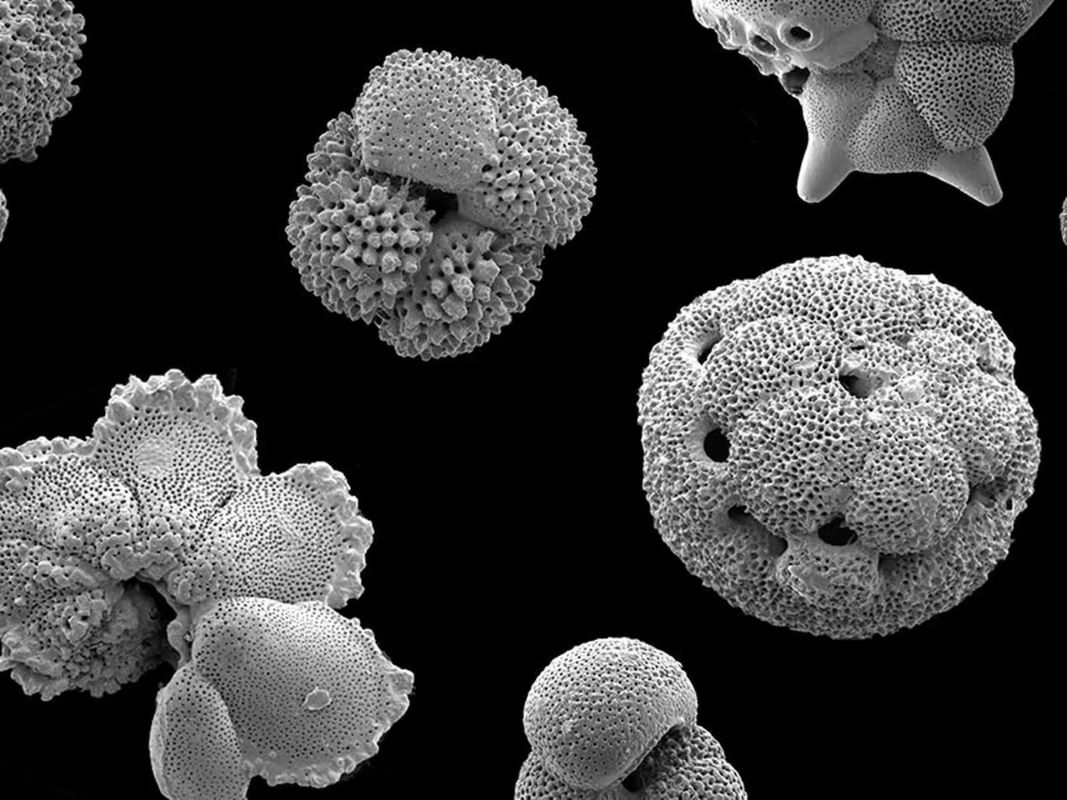
Marine microfossils are microscopic fossil
remains of marine organisms, especially plankton
¨
Marine microfossils are
the microscopic fossilized remains of marine organisms, particularly plankton.
¨
They are used as climate
proxies in paleoclimate studies.
¨
They have been
extensively used in the study of Antarctic sediment cores, fossil collections,
and marine drilling expeditions.
¨
These fossils help
reconstruct past interrelationships between ice, oceans, and climate, as well
as changes in the Antarctic Ice Sheet.
¨
Key marine microfossils
include the remains of foraminifera, diatoms, and other planktonic organisms.
¨
Their shells and
geochemical composition provide information on sea surface temperature,
salinity, ocean circulation, and ice cover.
¨
Scientists analyze these
fossils preserved in sediment cores to study climate changes across various
geological periods.
¨
Fossil collections from
Antarctica's Seymour Island and other regions provide evidence of the
continent's transition from an ice-free state to an ice-covered (icehouse)
climate.
¨
The Zinsmeister
Collection is a significant fossil collection used in Antarctic paleontology.
¨
Fossils obtained from the
Ross Sea and surrounding marine areas are used to study past environmental
changes.
¨
The International Ocean
Discovery Programme (IODP) has supported numerous scientific expeditions to
retrieve marine sediments from the Southern Ocean and the Ross Sea.
¨ Expedition 374 reconstructed Antarctica's climate history using microfossil and geochemical analyses.
¨ This expedition also aided in studying the stability of the Antarctic Ice Sheet. These records are used in historical studies of sea-level change.



, Jaipur, developed a low-cost sensor to detect minute amounts of toxic lead (Pb²⁺) ions in drinking water.jpg)